
 Niyaz
Niyaz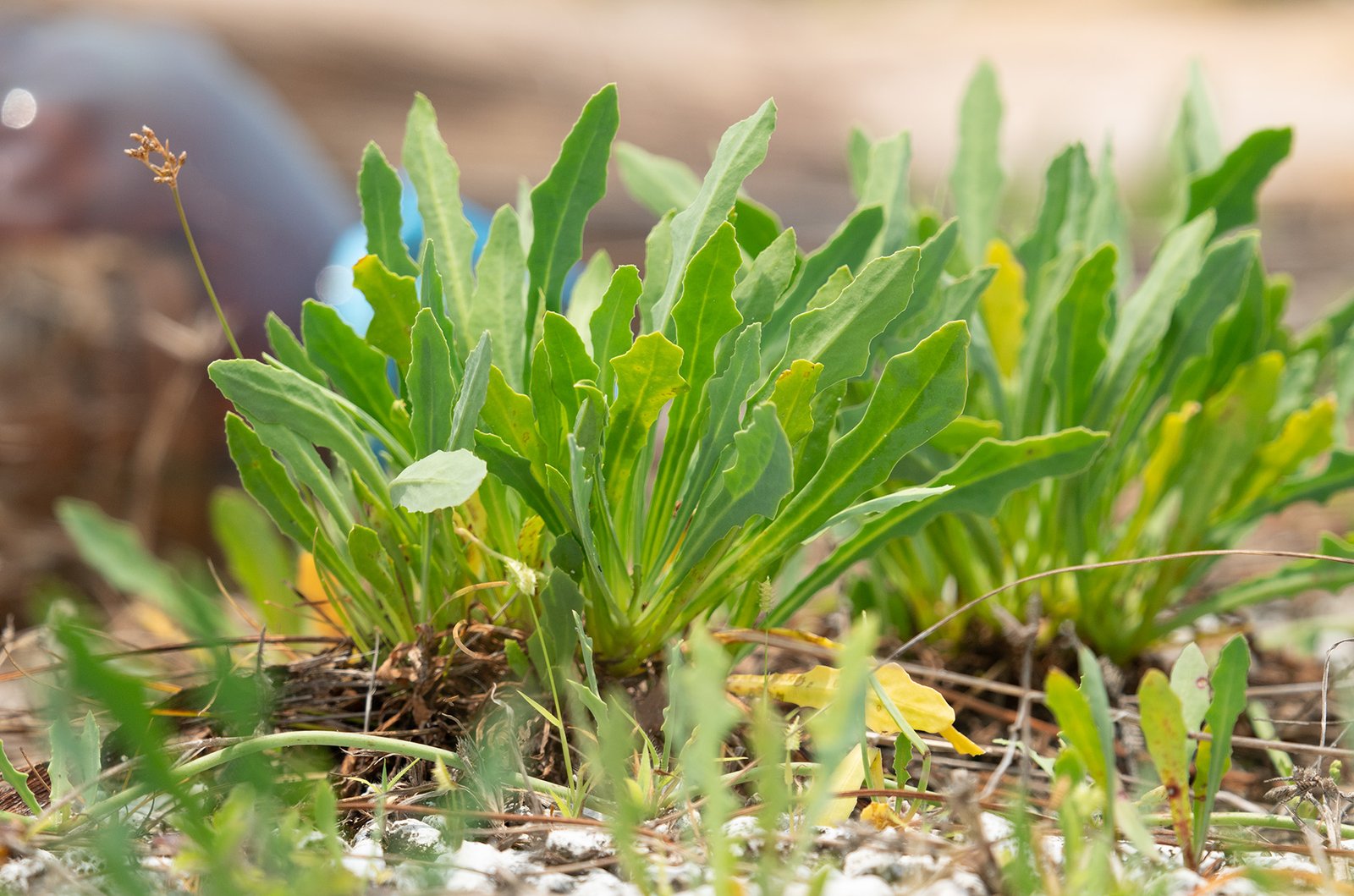
Launaea sarmentosa (Willd.) Sch.Bip. ex Kuntze is a low-growing coastal herb belonging to the family Asteraceae. It is commonly found on sandy beaches and other coastal habitats throughout the Maldives. In Dhivehi, the plant is known as Kulhafi la (ކުޅަފިލާ). Its edible leaves are widely collected and used in traditional Maldivian cuisine.
Synonyms
- Lactuca sarmentosa (Willd.) DC.
- Launaea bellidifolia Cass.
Description
Launaea sarmentosa is a biennial or perennial herb with slender stems that grow horizontally along the ground. The stems may produce roots where their nodes touch the soil, allowing the plant to spread across sandy coastal areas.
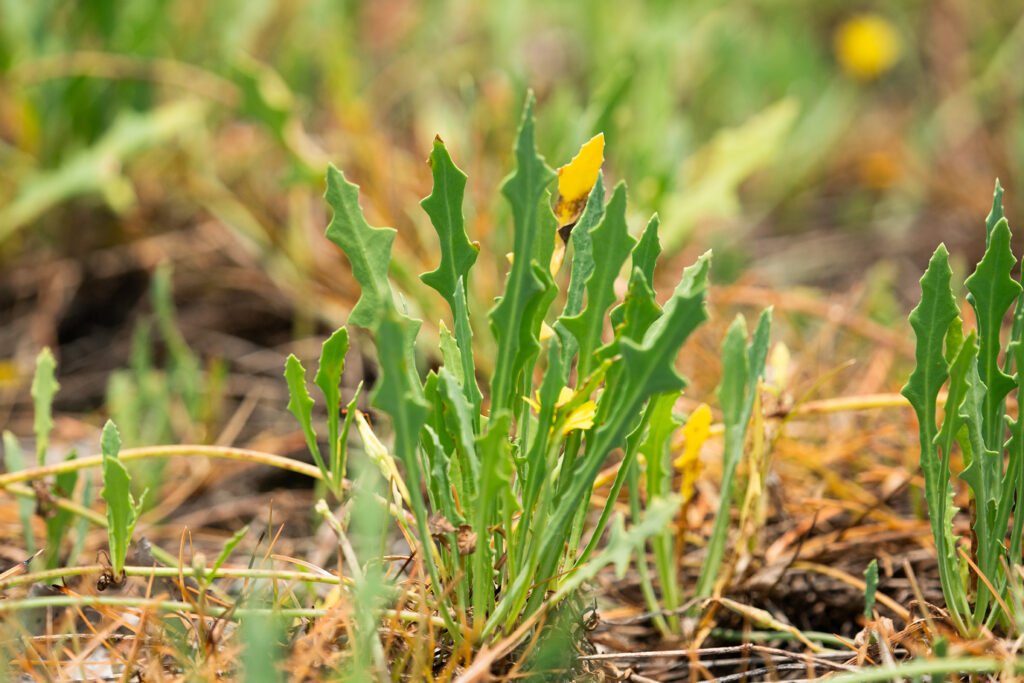
The leaves are usually 2–7 cm long and 0.4–1.2 cm wide. They are deeply divided, irregularly lobed or toothed, and often form a rosette close to the ground. The soft green leaves are the part most commonly collected for food.
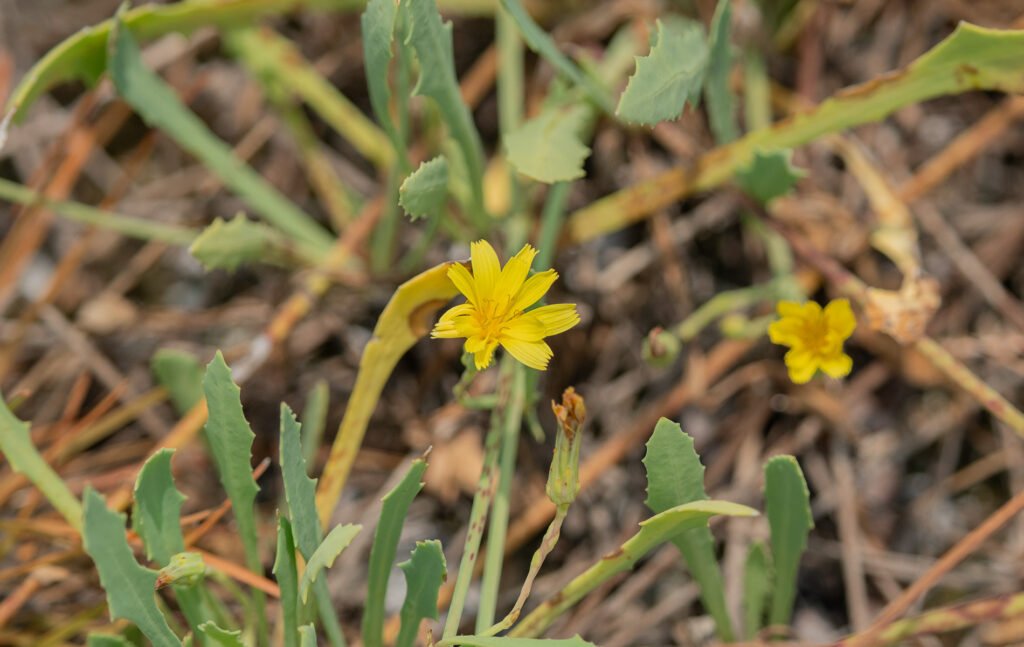
The flowering branches are long, thin and arching. Small flower heads usually grow at the stem nodes, either individually or in clusters. Each flower head measures approximately 0.8–1.2 cm long.
The flowers have bright yellow, strap-shaped florets. The fruits are pale, column-shaped achenes measuring around 4–6 mm long, with several prominent ribs. Each fruit bears a slender, yellowish-white pappus that helps it disperse by wind.
Flowering and Fruiting
Flowering and fruiting are commonly recorded between July and September.
Habitat
Beach launaea mainly grows in coastal environments. It is particularly well adapted to sandy, salty and exposed conditions near the seashore.
The plant commonly occurs:
- On sandy beaches
- Along beach ridges
- Near coastal vegetation
- In open areas behind the shoreline
- On disturbed sandy ground
Its creeping growth habit helps it remain close to the ground, where it is partly protected from strong coastal winds.
Distribution
The native range of Launaea sarmentosa includes coastal regions of Africa, South Asia and Southeast Asia. Its wider distribution includes tropical coastal areas of Africa, Asia and Australia.
Occurrence in the Maldives
Launaea sarmentosa is very common in the Maldives. It grows along the seashore and in nearby sandy areas on many inhabited and uninhabited islands.
The plant is familiar to Maldivians because of its abundance, edible leaves and importance in traditional food. It may grow naturally around houses and settlements situated close to the beach.
Uses in Maldivian Cuisine
The leaves of Kulhafi la are among the favourite traditional leafy vegetables used in the Maldives. Fresh leaves are collected, cleaned and finely chopped before being added to several local dishes.
One of the most popular preparations is faiy mashuni, a mixture of chopped leaves, grated coconut, onion, chilli and lime. It is commonly eaten with roshi, the traditional Maldivian flatbread.
Kulhafi la is also used to prepare rihaakuru faiy mashuni, in which the chopped leaves are mixed with rihaakuru, coconut and other ingredients. This gives the dish a stronger and richer flavour.
The leaves may also be eaten with baiypen, a soft rice-based meal. Because of these uses, the plant remains an important part of traditional Maldivian home cooking.
Traditional Medicinal Uses
The plant has also been used in traditional medicine. The root has traditionally been considered diuretic and has been included in some preparations given to mothers after childbirth.
The plant has also been described in traditional practices as anti-rheumatic and galactagogue. Its juice has sometimes been used as a mild sleeping preparation for children. These are traditional uses and should not be considered substitutes for professional medical advice.
Cultural Importance
Kulhafi la represents the close relationship between Maldivian communities and the natural plants found around their islands. Although it is a small and common beach herb, it has considerable cultural importance as a freely available source of leafy food.
Its continued use in dishes such as faiy mashuni and rihaakuru faiy mashuni helps preserve traditional Maldivian food knowledge and the practice of collecting edible native plants.
Conservation
The species is currently common across many islands in the Maldives. However, coastal development, beach modification, removal of natural vegetation and the construction of seawalls may reduce suitable habitat in some areas.
Protecting natural beach vegetation can help conserve this species and other native coastal plants that stabilise sand and support island biodiversity.
Reference
Food and Agriculture Organization of the United Nations. Information and botanical description credited to FAO and P. Sujanapal.

Share a useful observation
Comments can help improve local knowledge. Share identification notes, island records, behaviour, host plants, or corrections respectfully.