
 Niyaz
Niyaz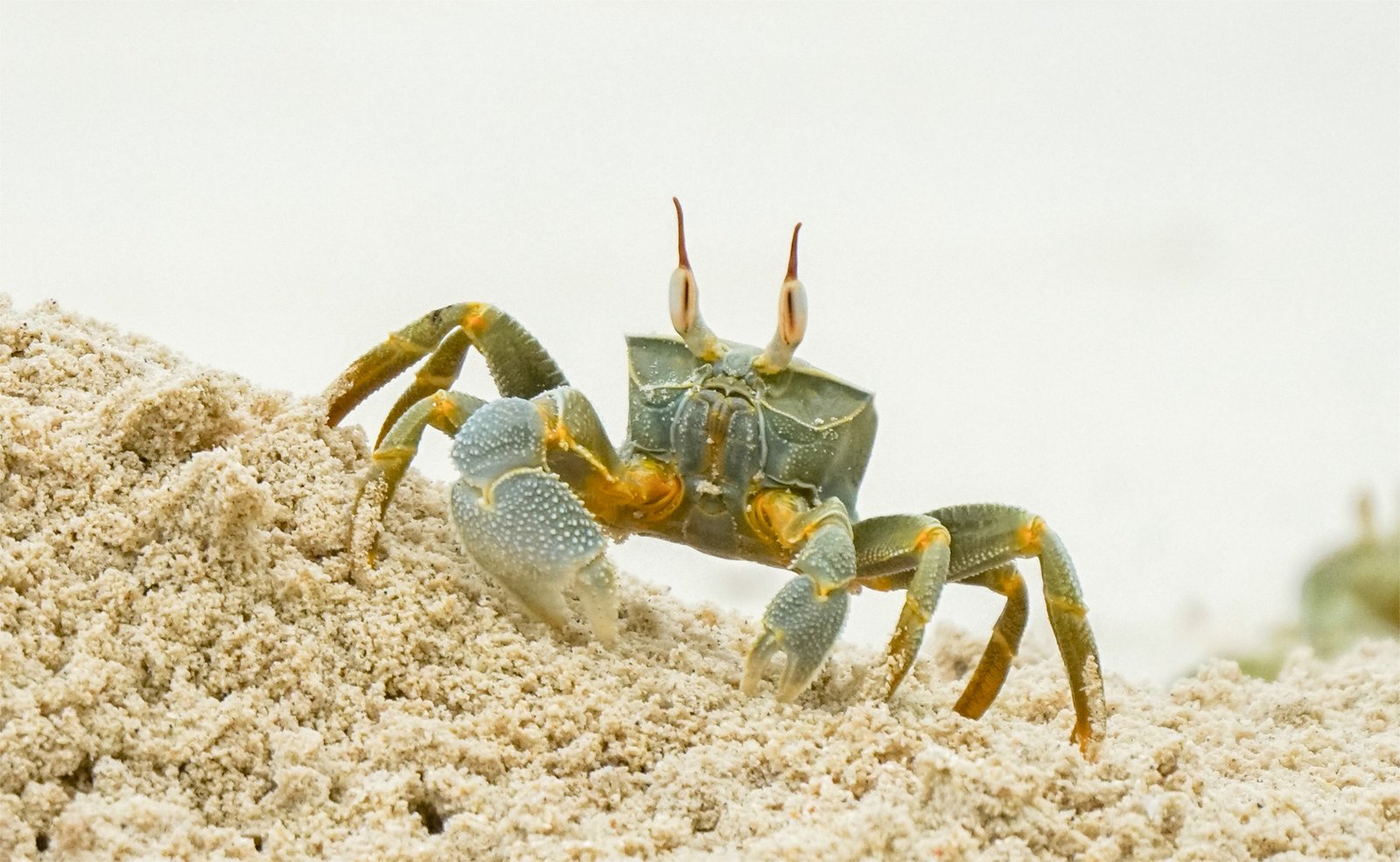
The crab shown in these photographs appears to be the horn-eyed ghost crab or horned ghost crab (Ocypode ceratophthalmus). It can be identified by the long, horn-like extensions above its eyes, its broad box-shaped body, long walking legs and unequal claws. The accepted scientific name is Ocypode ceratophthalmus, and the species belongs to a group of fast-moving, semi-terrestrial crabs that inhabit tropical sandy shores.
In Dhivehi, small pale crabs living along sandy beaches are generally called ކިރުކަކުނި, transliterated as Kiru Kakuni. This local name may be used for several similar ghost crabs rather than exclusively for this species. The Dhivehi dictionary describes ކިރުކަކުނި as a small whitish crab found along the shore.
Description
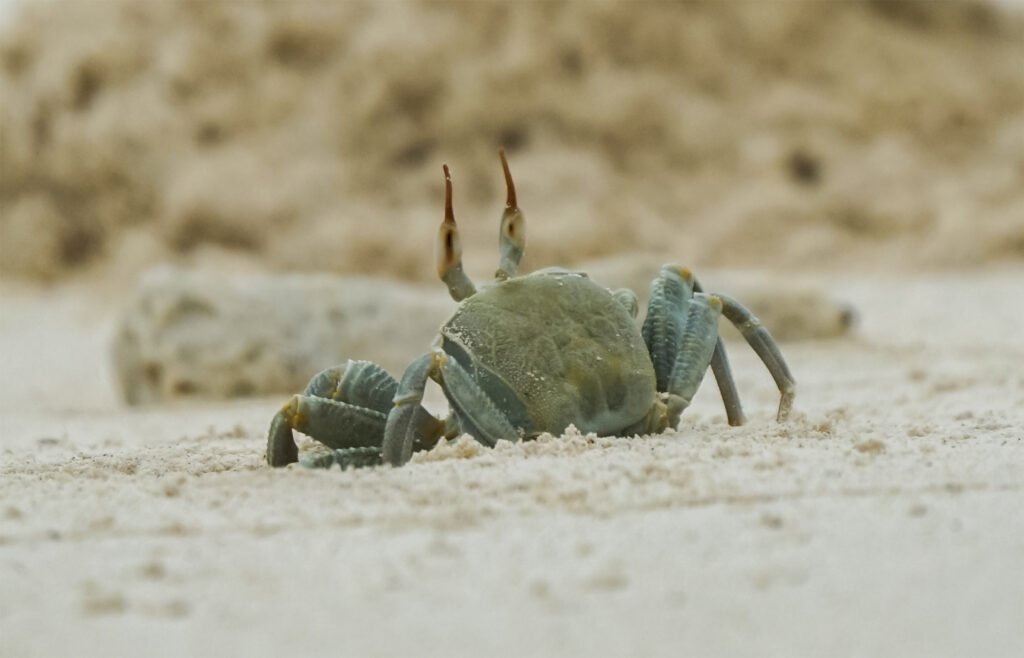
The horn-eyed ghost crab has a nearly rectangular carapace with slightly pointed outer corners. Its eyes are positioned on long movable stalks, allowing the crab to observe a wide area around it while most of its body remains close to the ground. The thin horn-like projections extending above the eyes are the species’ most recognisable feature and help distinguish it from other ghost crabs found on Indo-Pacific beaches.
The legs are long and adapted for rapid movement across loose sand. One claw is usually larger than the other, although the difference is less extreme than in fiddler crabs. Colour varies from pale cream and yellowish grey to blue-grey, greenish or dark grey. The claws may be pale blue or grey and are often covered with small light-coloured spots.
Young horn-eyed ghost crabs are especially well camouflaged against sandy backgrounds. Research has shown that juveniles may become lighter and more yellow during daylight and darker during the night, improving their camouflage under changing light conditions.
Habitat
The horn-eyed ghost crab inhabits open sandy beaches in the tropical Indo-Pacific. It is usually found from the intertidal area to the upper beach above the normal high-tide line. The species digs deep, tube-like burrows in loose sand, particularly along exposed shores.
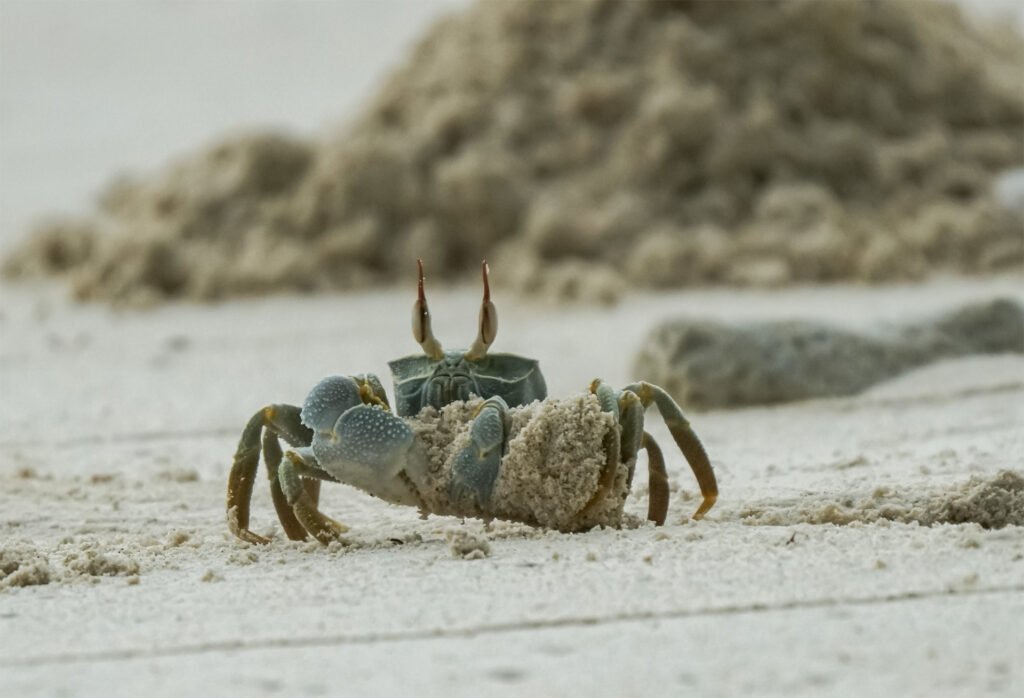
The burrow provides protection from high daytime temperatures, dry conditions, predators and strong coastal winds. It also helps the crab maintain the moisture required for respiration. Freshly excavated sand is often visible around the entrance, and the size of the opening may give an indication of the crab’s size.
In the second photograph, the crab appears to be carrying or pushing a compact mass of sand while excavating or clearing its burrow. Ghost crabs commonly use their claws and walking legs to remove sand, creating small piles beside the entrance.
Behaviour
Horn-eyed ghost crabs are extremely alert and can move rapidly in any direction. When disturbed, they usually run towards their burrow and disappear below the sand. Their pale colour, quick movements and ability to vanish into burrows are the reasons they are known as ghost crabs.
They are mainly active during the evening and at night, particularly when temperatures are cooler. They may also emerge during cloudy weather or for brief periods during the day. At low tide, individuals may move towards the waterline to search for food before returning to the upper beach.
Although they live mainly on land, ghost crabs breathe through gills that must remain moist. They obtain moisture from damp sand, their burrows and occasional contact with seawater. Their activities therefore remain closely connected to the shoreline.
Diet
The horn-eyed ghost crab is an opportunistic predator and scavenger. It feeds on dead fish, small crustaceans, molluscs, marine worms, insects and other edible material deposited by the tide. It may also capture small living animals near the water’s edge.
By feeding on stranded animals and organic remains, ghost crabs help remove decaying material from beaches. They are also important predators within the sandy-shore food web and may influence the abundance of smaller beach animals.
Breeding and development
Females carry fertilised eggs beneath the abdomen until they are ready to hatch. Egg-bearing females travel towards the waterline and release the developing larvae into seawater.
The larvae are planktonic and develop through five zoeal stages before reaching the megalopa stage. After completing their marine development, the young crabs settle near sandy shores and gradually adopt the semi-terrestrial life of adults. Laboratory observations of Ocypode ceratophthalmus found that development through the five zoeal stages to the megalopa stage took approximately forty days under the conditions studied.
Distribution
The horn-eyed ghost crab is widely distributed across the Indo-Pacific region. Its range includes tropical coasts of the Indian and western Pacific oceans, extending from parts of East Africa across southern and southeastern Asia to islands of the western Pacific and northern Australia.
The species occurs on sandy beaches in the Maldives, where suitable white-sand shorelines provide feeding areas and places for burrow construction. Its pale body colour often blends closely with Maldivian coral sand, making stationary individuals difficult to notice.
Ecological importance and conservation
Ghost crabs are an important part of healthy sandy-beach ecosystems. They function as predators, scavengers and prey for larger coastal animals. Their digging also moves and aerates beach sediment.
Populations can be affected by heavy foot traffic, vehicles, artificial lighting, mechanical beach cleaning, construction, pollution and the removal of natural shoreline vegetation. Because their burrows are easy to count, ghost crabs are sometimes used as ecological indicators when measuring human disturbance on sandy beaches.
Protecting natural beach areas, reducing unnecessary nighttime lighting and avoiding damage to burrows can help maintain healthy populations of this distinctive Maldivian shore crab.

Share a useful observation
Comments can help improve local knowledge. Share identification notes, island records, behaviour, host plants, or corrections respectfully.