
 By
By Introduction
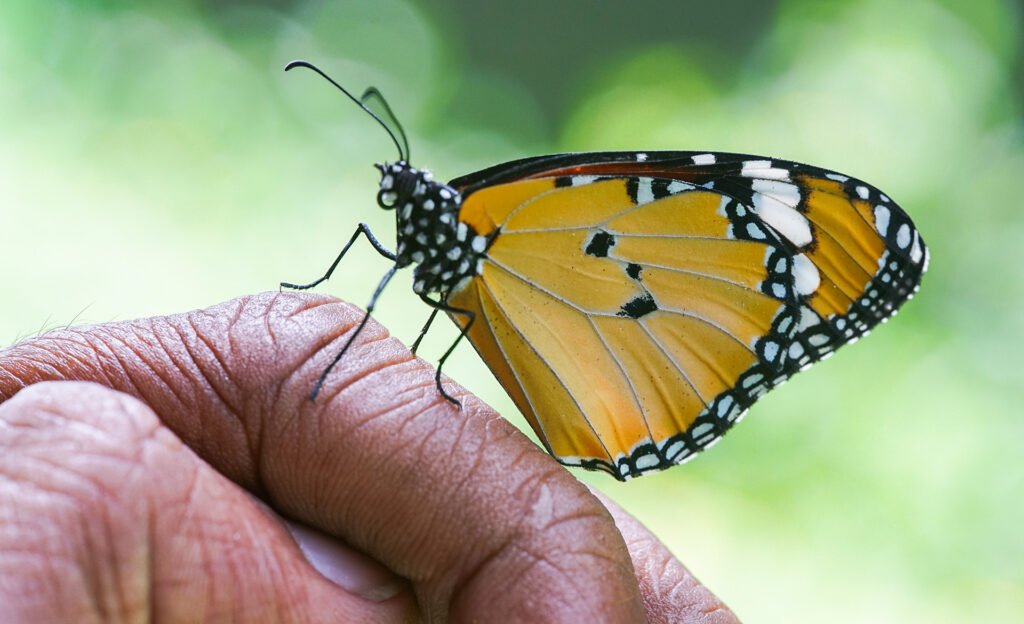
The Plain Tiger butterfly (Danaus chrysippus) is one of the most common and easily recognizable butterflies in the Maldives. With its bright orange wings, bordered by bold black edges and white spots, it is a familiar sight across islands, especially in coastal vegetation, gardens, and open grassy areas.
Despite its common presence, this butterfly represents one of the most fascinating examples of complete metamorphosis in nature. In the Maldives, due to the warm tropical climate, this species breeds continuously throughout the year, allowing observers to witness its full life cycle at almost any time.
🧬 Identification and Appearance
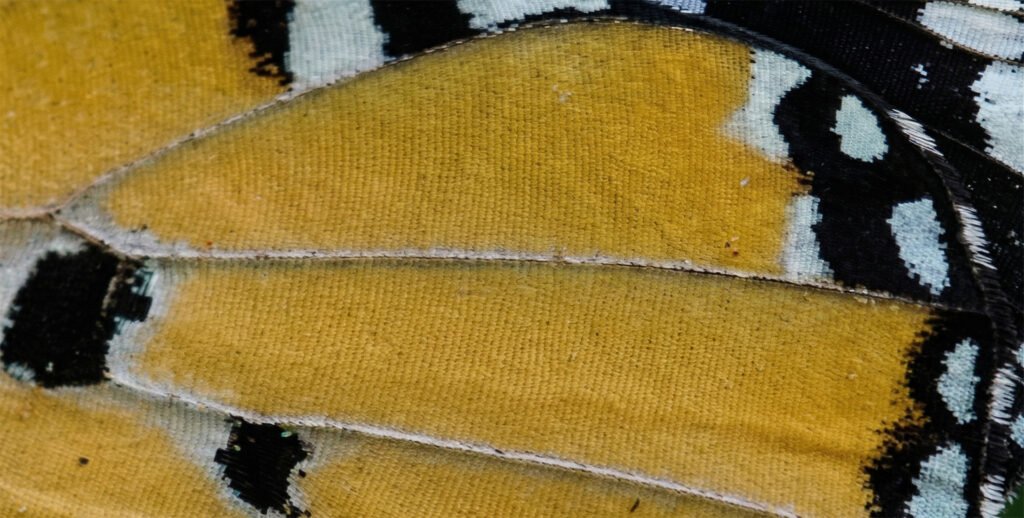
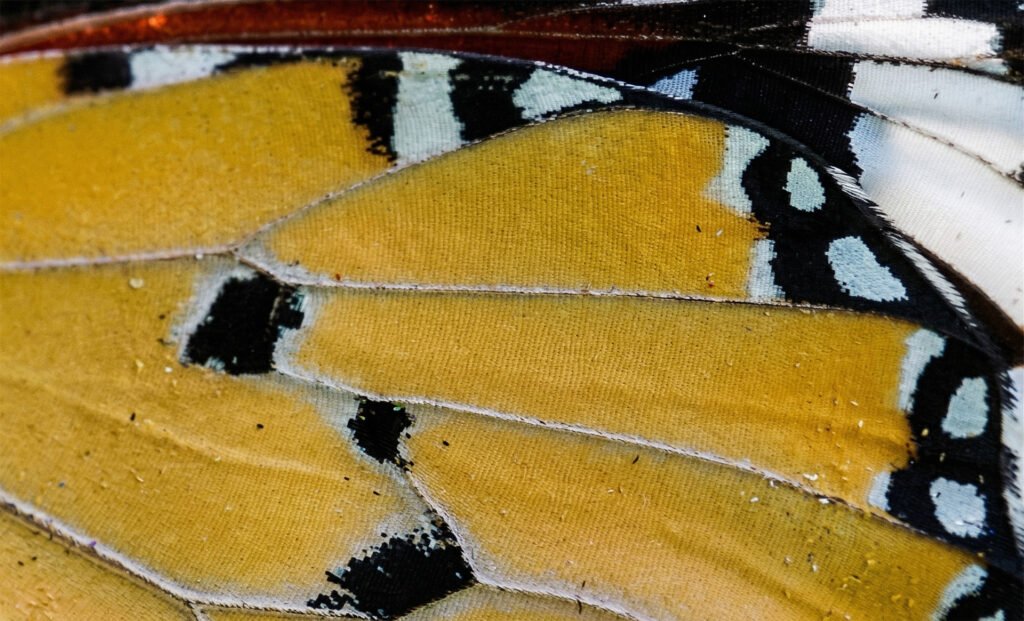
The adult Plain Tiger is unmistakable in the field. Its wings display a rich orange coloration, contrasted with black margins filled with white spots, forming a clear warning pattern.
The body is black with small white speckles, and the antennae are slender with slightly thickened tips. Unlike many fast-moving butterflies, the Plain Tiger exhibits a slow, floating flight, often gliding smoothly through the air.
👉 Important note:
This slow flight is not weakness — it is supported by its chemical defense, making it unpalatable to predators.
🥚 Egg Stage — The Beginning of Life
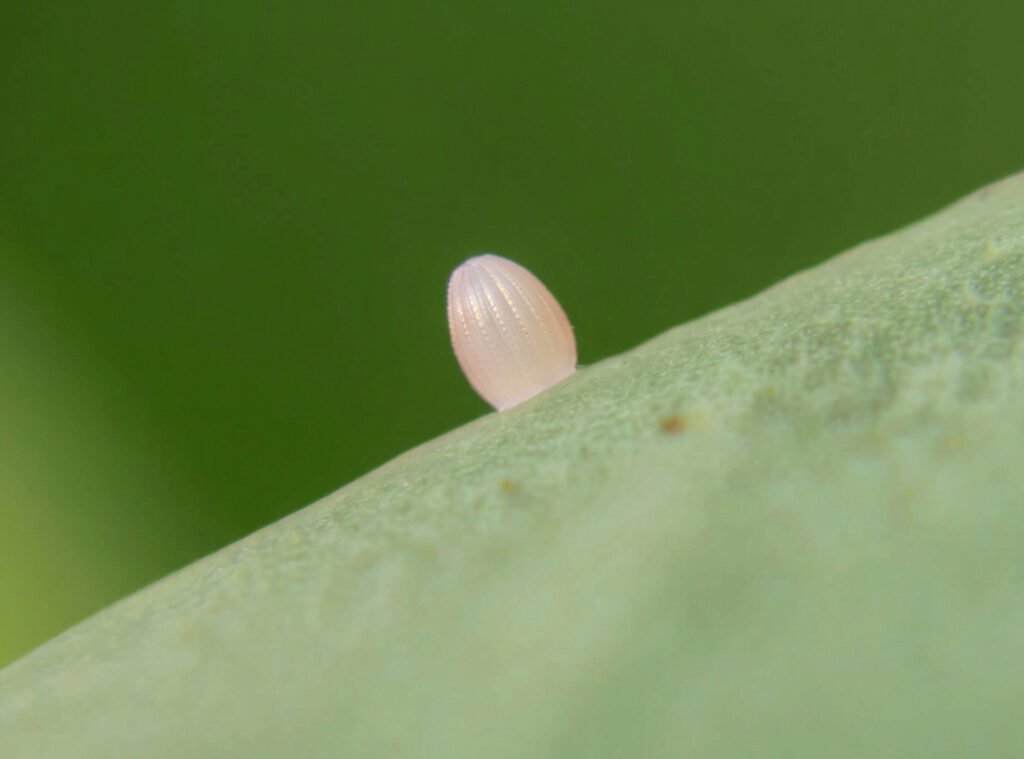
The life cycle begins when the female lays tiny, oval-shaped white eggs, usually on the underside of leaves of host plants such as milkweed (Calotropis).
Each egg is laid individually, not in clusters, which helps reduce competition among the larvae.
⏱️ Duration: 2–4 days
Once hatched, the tiny caterpillar immediately begins feeding.
🐛 Caterpillar Stage — Growth and Defense
The caterpillar is one of the most striking stages of this butterfly.
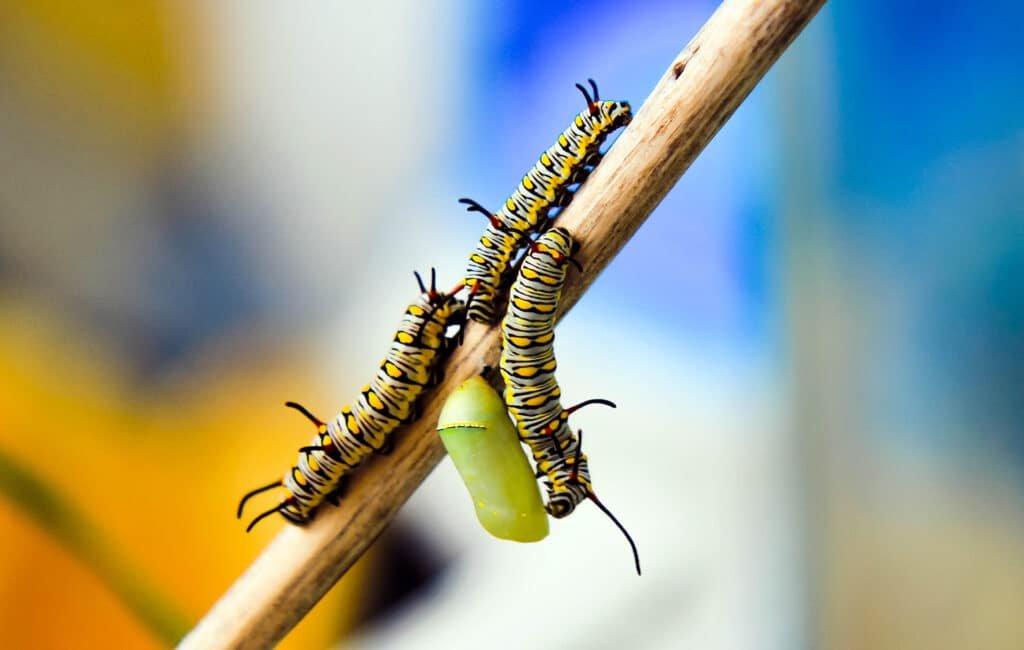
It features bold black, white, and yellow stripes, along with long tentacle-like filaments at both ends of its body. During this stage, the caterpillar feeds actively on milkweed leaves.
🔥 Key highlight:
The caterpillar absorbs toxic chemicals from the host plant, which remain in its body even after becoming a butterfly.
This makes both the caterpillar and adult poisonous to many predators, especially birds.
⏱️ Duration: 7–14 days
As it grows, the caterpillar sheds its skin several times before reaching full maturity.
🟢 Chrysalis Stage — Transformation
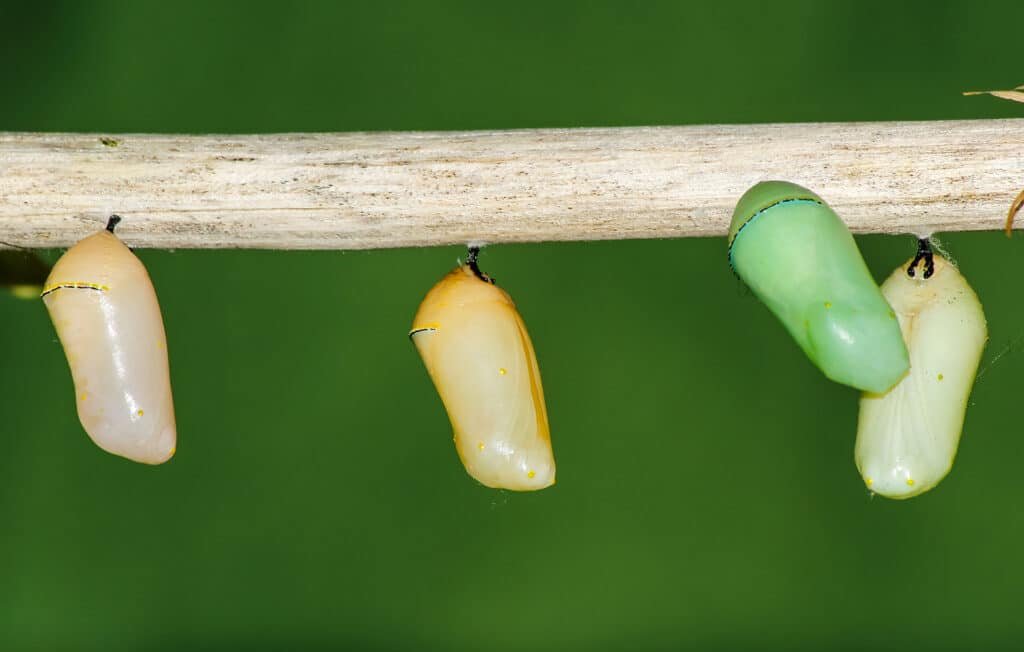
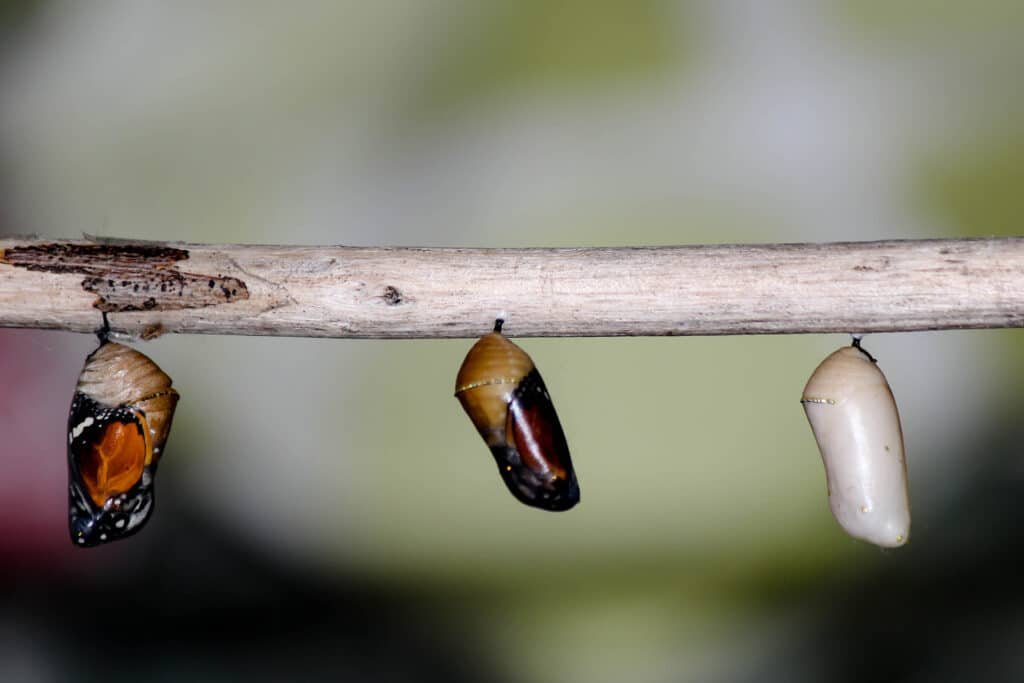
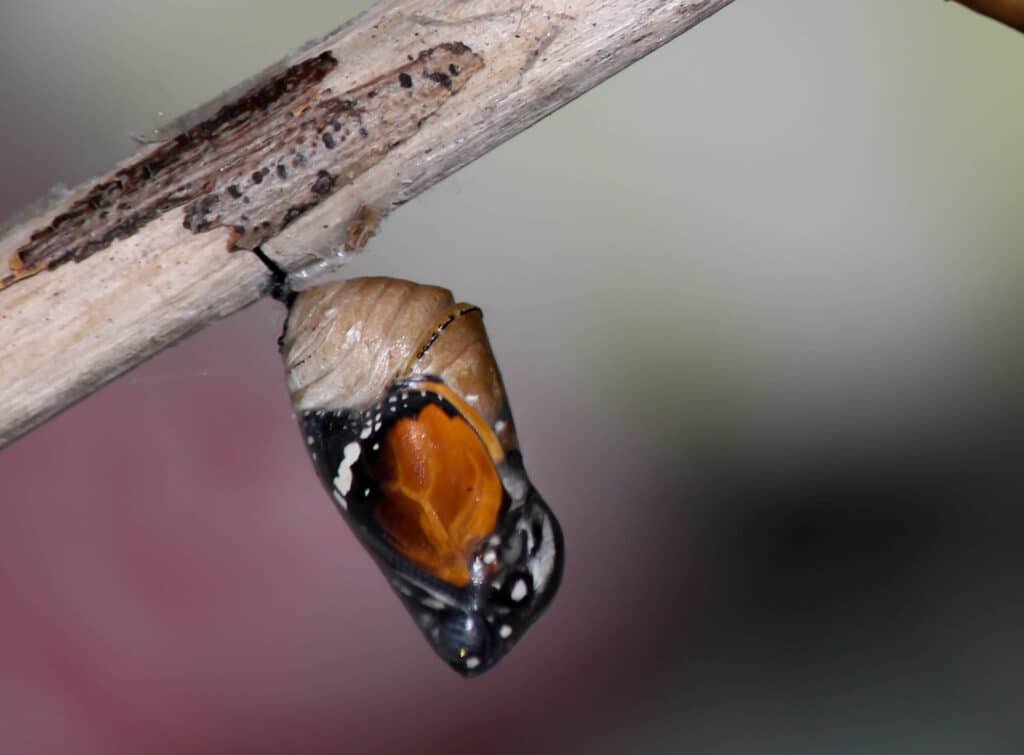
After completing its growth, the caterpillar attaches itself to a surface and hangs in a distinct “J-shape.” It then transforms into a chrysalis.
The chrysalis is smooth and often green or pale-colored, decorated with small metallic gold spots, making it one of the most beautiful stages.
✨ Inside this stage:
The caterpillar’s body is completely reorganized into a butterfly — a process known as metamorphosis.
⏱️ Duration: 7–10 days
As the transformation nears completion, the chrysalis becomes darker, and the butterfly’s wing patterns begin to show.
🦋 Adult Emergence — A New Life
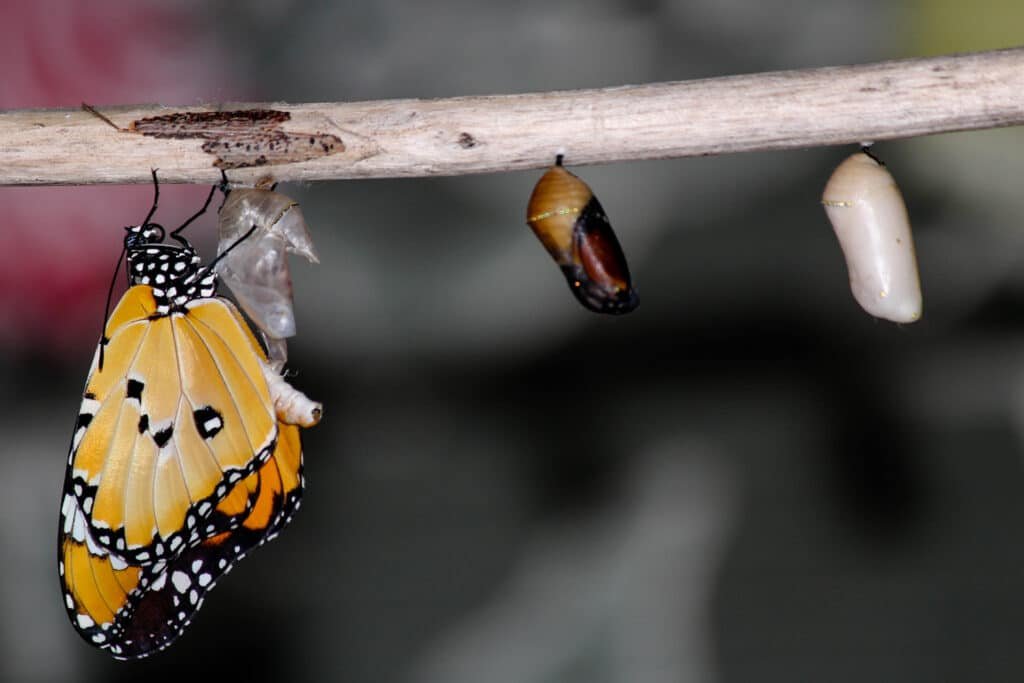
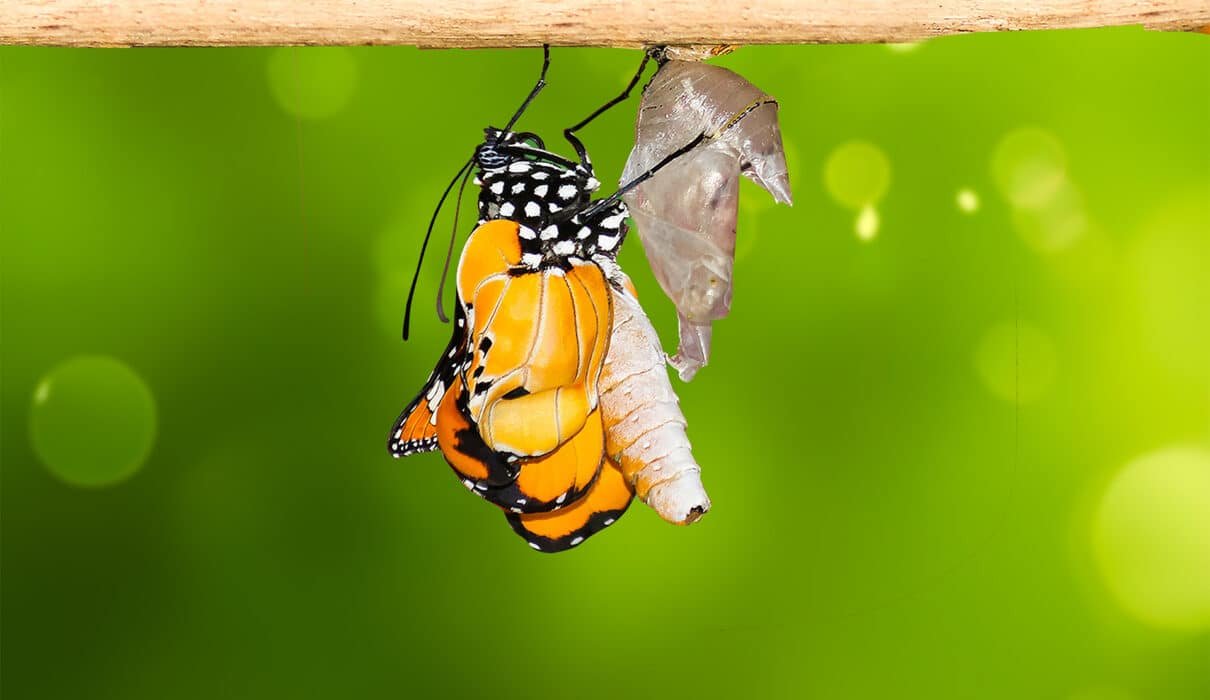
The butterfly emerges from the chrysalis in a delicate process called eclosion.
At first, the wings are soft and folded, and the butterfly hangs downward while pumping fluid into them.
Wing expansion: 30–60 minutes
- Drying time: 2–3 hours
Once the wings harden, the butterfly takes its first flight, completing the transformation.
🌸 Feeding and Ecological Role
Adult Plain Tiger butterflies feed on nectar from flowers, making them important pollinators.
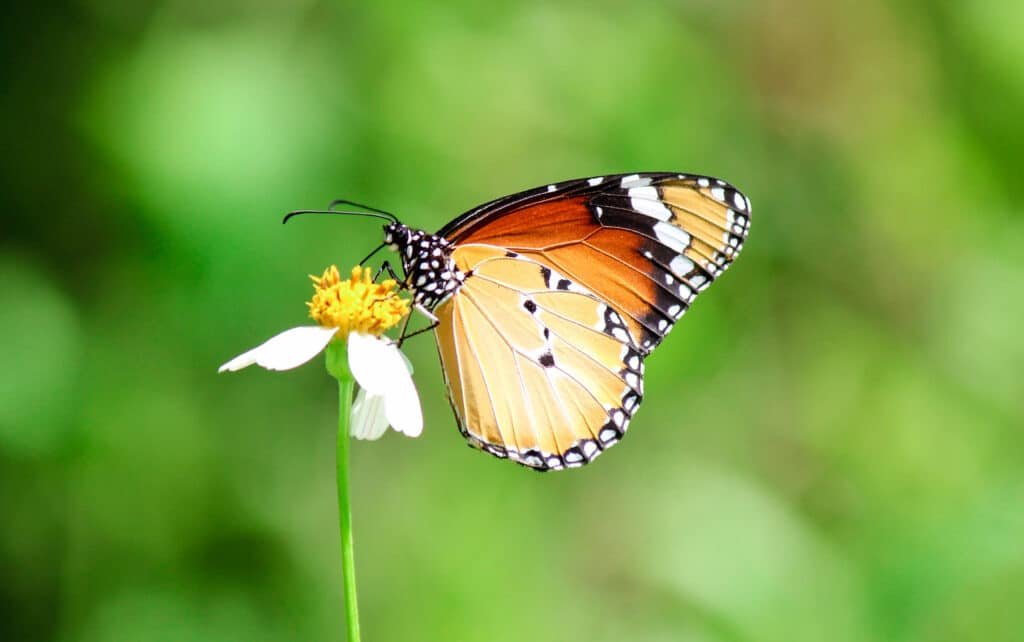
🌼 Ecological importance:
- Supports plant reproduction
- Maintains biodiversity
- Part of the natural food web
🛡️ Defense Mechanism — Nature’s Warning System
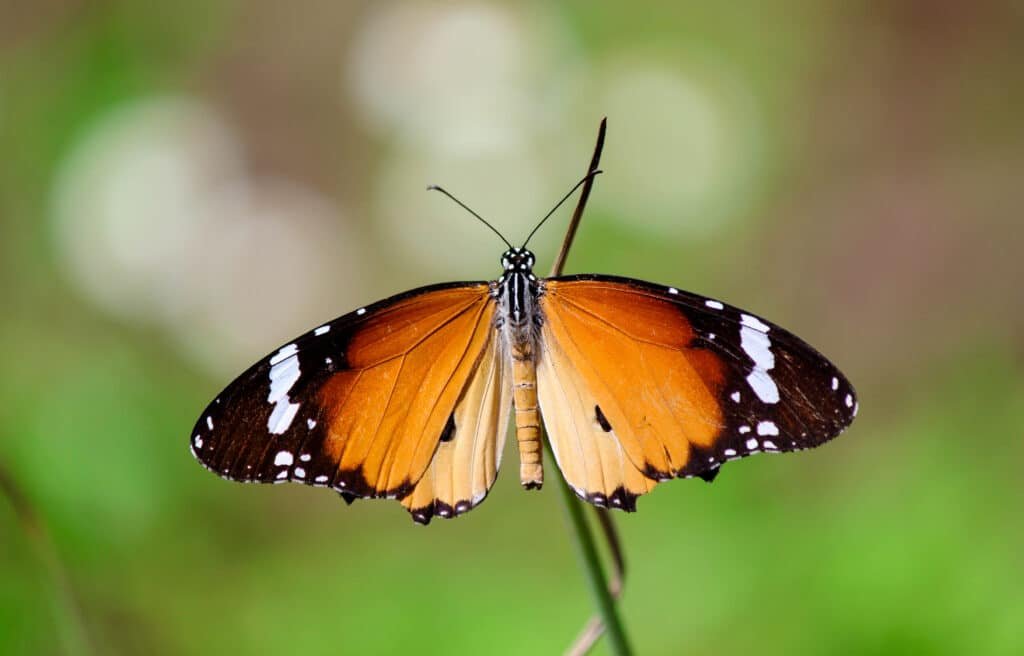
One of the most important features of Danaus chrysippus is its toxicity.
Because of the chemicals absorbed during the caterpillar stage, the butterfly becomes unpalatable to predators.
⚠️ Warning coloration (Aposematism):
The bright orange and black colors act as a signal —
“Do not eat me.”
Over time, predators learn to avoid this species completely.
❤️ Mating and Reproduction
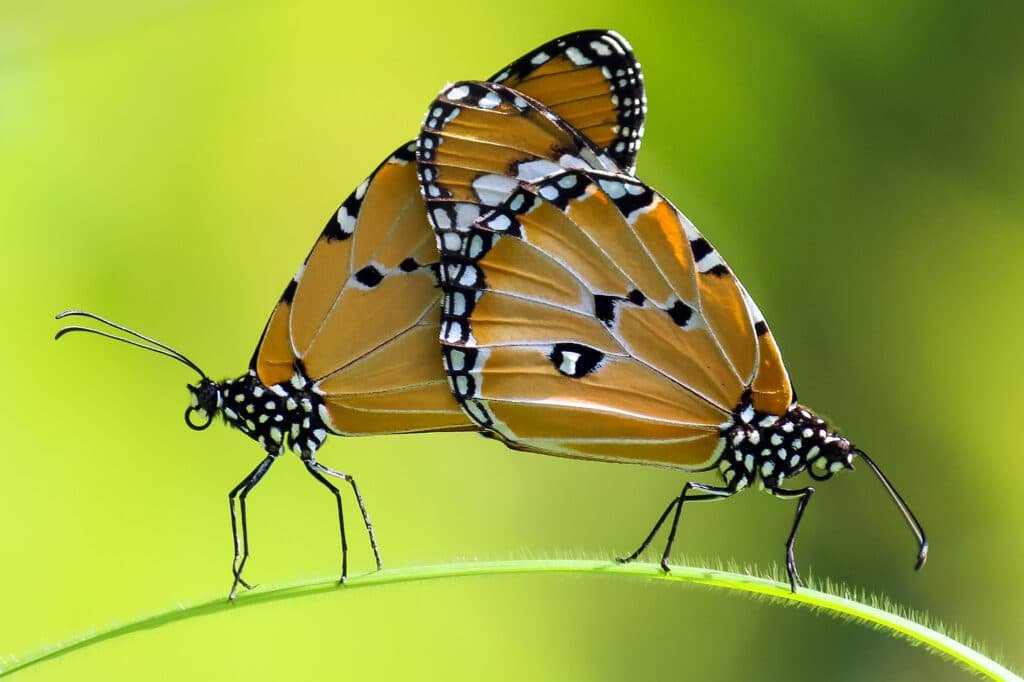
The Plain Tiger shows interesting reproductive behavior.
Males locate females using chemical signals (pheromones) and follow them closely before mating.
💡 Observation highlight:
Mating pairs can often be seen resting together for extended periods.
After mating, the female lays eggs individually, continuing the life cycle.
🌍 Habitat and Distribution in the Maldives
This butterfly is found across almost all islands in the Maldives.
It prefers:
- Open sunny areas
- Coastal vegetation
- Gardens and roadside plants
🌱 Why it is so common:
- Abundant host plants (milkweed)
- Favorable tropical climate
- Low predator pressure
📸 Field Observation Value
The Plain Tiger is one of the best butterflies for field observation and documentation in the Maldives.
📷 It is possible to observe:
- Eggs on leaves
- Caterpillars feeding
- Chrysalis stages
- Butterfly emergence
- Adult behavior and mating
👉 Important:
Few species allow such complete life cycle observation in one location, making this butterfly extremely valuable for research and education.
🎓 Educational Importance
This species is ideal for teaching:
- 🔄 Life cycles and metamorphosis
- 🌿 Ecology and plant–insect relationships
- 🛡️ Adaptation and survival strategies
- 🌍 Biodiversity awareness
It is especially useful for:
- Schools
- Students
- Wildlife enthusiasts
- Citizen science projects
📚 Conclusion
The Plain Tiger (Danaus chrysippus) is more than just a common butterfly in the Maldives. It is a living example of transformation, adaptation, and ecological balance.
Its ability to thrive across islands, combined with its fascinating life cycle and defensive strategies, makes it one of the most important butterflies for understanding nature in the Maldives.
Through careful observation and documentation, this species can play a key role in building awareness about local biodiversity and conservation.