
 Niyaz
Niyaz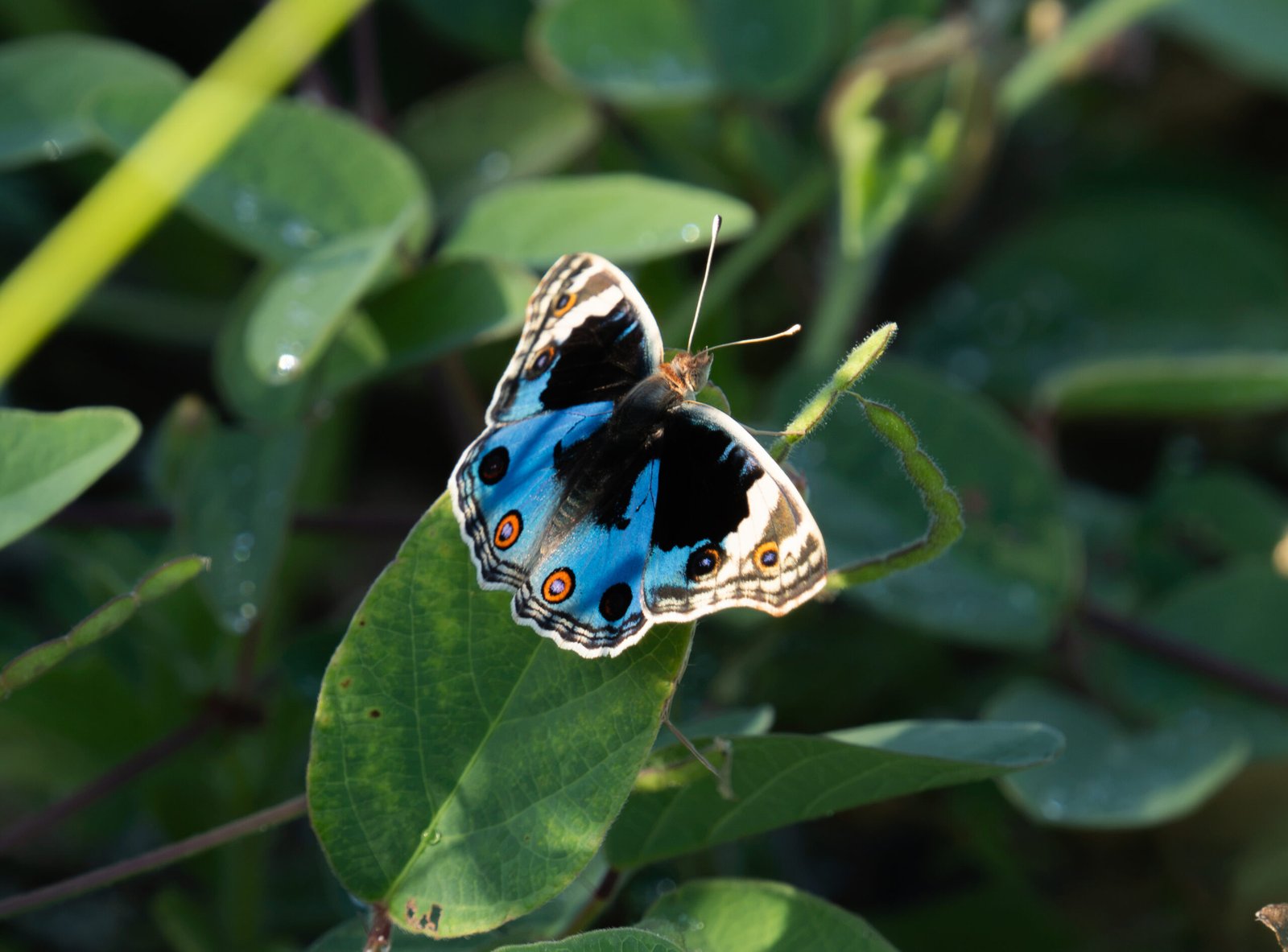
The Blue Pansy (Junonia orithya) is a medium-sized butterfly belonging to the brush-footed butterfly family, Nymphalidae. It is recognised by the brilliant blue colour on the upper surface of the male’s hindwings, contrasting black forewings, white bands and prominent eye-shaped markings.
The species has a wide geographical distribution extending across parts of Africa, South Asia, Southeast Asia and Australia. Although it is widespread internationally, it appears to be uncommon or rarely reported in the Maldives. A recent observation at Hulhumalé Central Park provides an important record of the species from an urban green space in the country.
Description
The Blue Pansy has a wingspan of approximately 58–76 millimetres. The male is particularly distinctive when resting with its wings open. Its hindwings display a strong blue colour bordered with black and white markings. The forewings are mainly dark brown or black, crossed by irregular white bands and marked with orange-ringed eyespots.
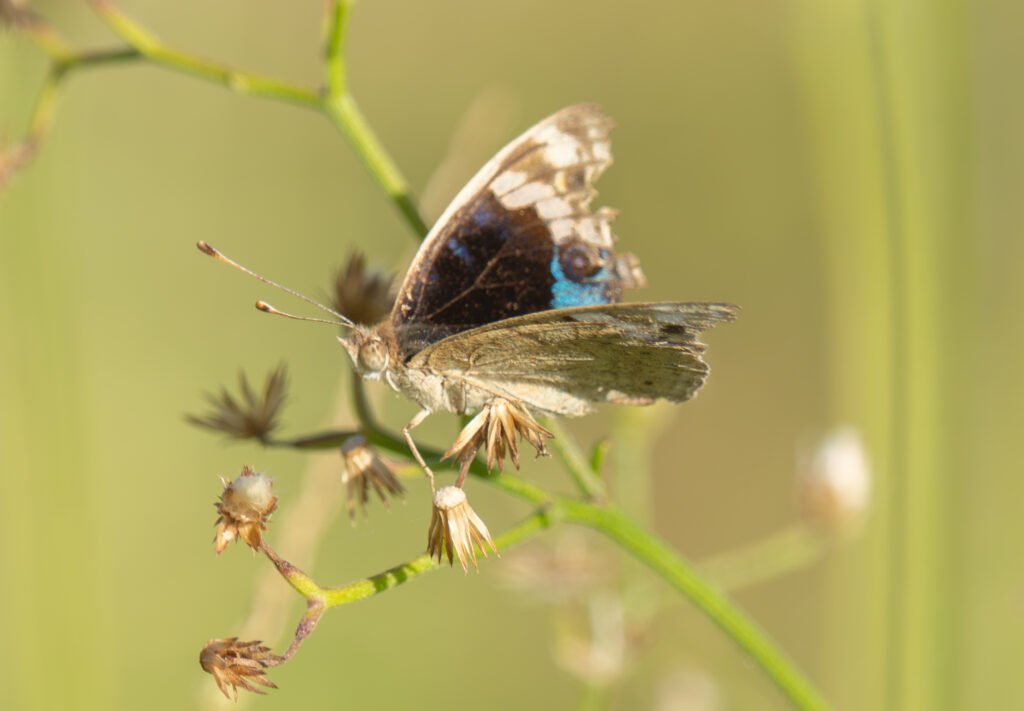
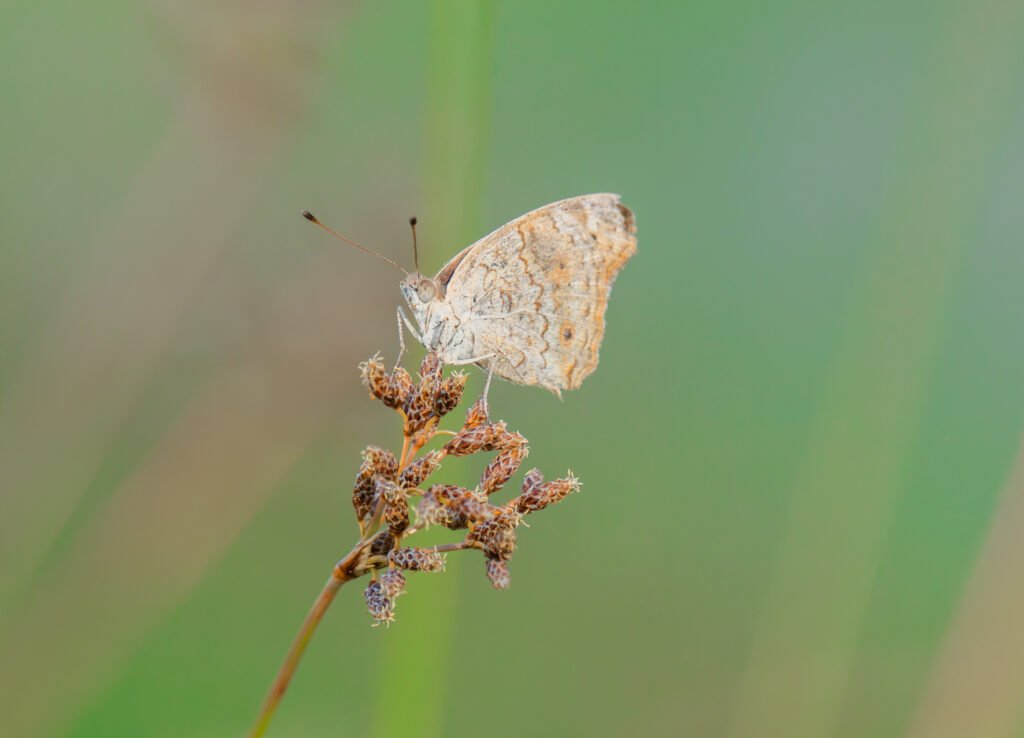
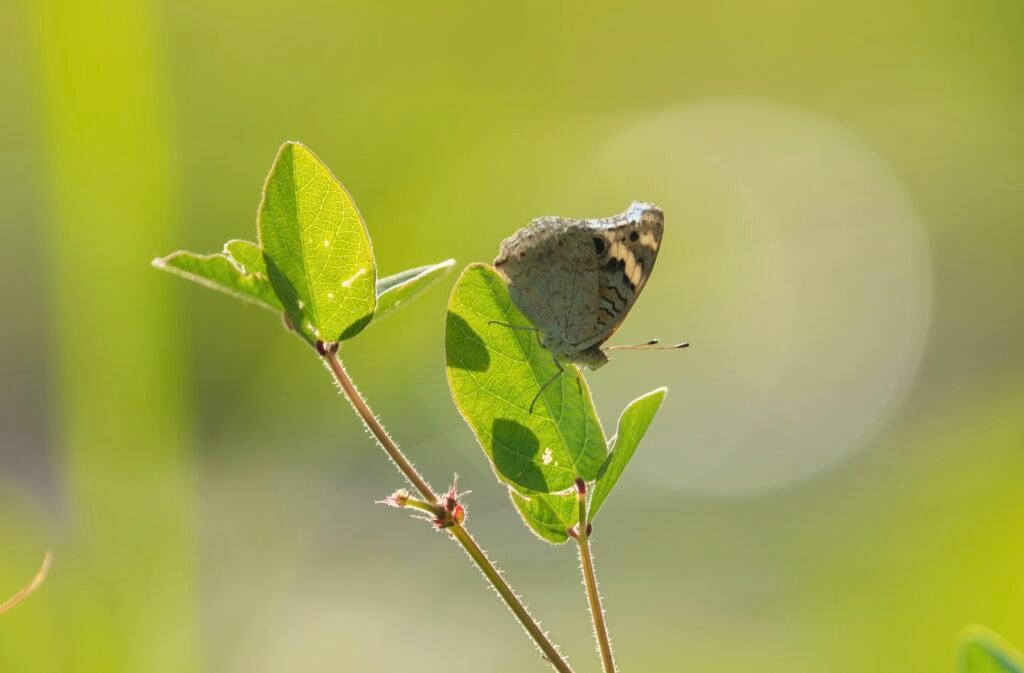
Females are generally larger and less brightly coloured than males. Their wings are usually brownish-grey, with white bands and several visible eyespots. The underside of both sexes is much duller, consisting mainly of brown, grey and pale markings. This less conspicuous underside helps the butterfly blend with dry vegetation, soil and fallen leaves when its wings are closed.
The eye-shaped markings, known as ocelli, may help distract or confuse predators by directing attacks away from the butterfly’s body. The eyespots of Junonia orithya have also been used in scientific studies examining the development and physical formation of butterfly wing patterns.
Distribution
The Blue Pansy occurs across a broad tropical and subtropical range. It has been recorded in central and southern Africa, the Indian subcontinent, southern and southeastern Asia, parts of the Middle East, several Indian Ocean regions and Australia. Numerous geographical subspecies have been described across this extensive range.
The exact subspecies occurring in the Maldives requires further study. It should not be assigned based only on geographical proximity, as identification of subspecies may require detailed examination of wing patterns, specimens and regional taxonomic records.
Habitat
Blue Pansies are mainly associated with sunny and relatively open environments. Typical habitats include grasslands, gardens, roadsides, cultivated land, forest edges, scrub, parks and other areas containing low vegetation.
Adults are frequently seen resting with their wings spread on bare soil, rocks, pathways or low-growing plants. This behaviour allows them to absorb heat from sunlight. Males may occupy small territories and chase away other butterflies that enter the area.
The observation at Hulhumalé Central Park matches the species’ preference for open, sunny habitats with grasses, flowering plants, exposed ground and low vegetation.
Behaviour and feeding
The Blue Pansy is an active butterfly with a fast flight consisting of several wingbeats followed by short gliding movements. It often returns to the same resting place after being disturbed.
Adults feed on nectar from small flowering plants. They may also visit moist soil to obtain salts and minerals. When resting in sunlight, the butterfly usually opens its wings fully, making the blue colour and eyespots clearly visible.
Males tend to display a stronger blue colour than females. The brightness may vary depending on the viewing angle, condition of the wings and intensity of sunlight.
Life cycle and host plants
Like other butterflies, the Blue Pansy passes through four life stages: egg, caterpillar, pupa and adult. Females lay their eggs on or near suitable larval host plants.
The caterpillar is generally dark brown or black and has rows of branched spines along its body. Although it may appear dangerous, it is not known to be harmful to people. The pupa is attached to vegetation by its lower end and remains suspended until the adult butterfly emerges.
Recorded larval host plants include species belonging to several plant groups. Examples include Acanthus, Barleria, Hygrophila, Justicia, Lepidagathis, Ruellia, Mimosa pudica and the sweet potato, Ipomoea batatas. Evolvulus nummularius has also been documented as a larval host plant.
Identifying the host plant used in the Maldives would help determine whether the Blue Pansy is breeding locally or whether some individuals arrive through occasional dispersal.
Occurrence in the Maldives
The Blue Pansy has not previously been regarded as one of the butterflies commonly encountered or frequently documented in the Maldives. Available published and photographic records appear to be limited, while the absence of regular national butterfly monitoring makes its true abundance and distribution difficult to determine.
In 2026, I observed a Blue Pansy at Hulhumalé Central Park, within an urban landscaped environment containing open sunny areas and flowering vegetation. This observation confirmed the presence of the species in Hulhumalé and indicated that urban parks may provide suitable feeding and resting habitats.
More recently, I recorded the Blue Pansy on several islands of Gaafu Dhaalu Atoll, including Thinadhoo, Madaveli, Hoandehdhoo, and Gahdhoo. The species appeared to be very common on these islands. In Gahdhoo, in particular, I observed numerous individuals, including groups of butterflies occupying the same areas.
These repeated observations across several islands indicate that the Blue Pansy may be more widespread and locally abundant in the southern Maldives than previously understood. However, observations of adult butterflies alone do not fully confirm established breeding populations. Further surveys should document egg-laying females, caterpillars, pupae, and the host plants used by the species on these islands.
Conservation
The Blue Pansy has a broad global distribution and is not generally considered a globally restricted butterfly. Its local condition in the Maldives is less certain because detailed information on its population, breeding status and island distribution is unavailable.
Urban development, pesticide use, frequent removal of low-growing plants and loss of flowering vegetation may reduce suitable butterfly habitat. Maintaining pesticide-free areas, native flowering plants, ground vegetation and potential caterpillar host plants in public parks could support this and other butterfly species.
Photographic records should include the date, island, exact habitat, behaviour and plants used by the butterfly. Continued documentation may show whether the Blue Pansy is a rare visitor, an overlooked resident or a species that is gradually establishing itself in parts of the Maldives.
References
- Global Biodiversity Information Facility. Junonia orithya Linnaeus, 1758.
- Florida Museum of Natural History. Blue Pansy, Junonia orithya.
- Kunte, K., Sondhi, S. and Roy, P., editors. Butterflies of India: Junonia orithya — Blue Pansy.
- Mukherjee, K. 2022. Reports of new larval host plants for Junonia orithya from West Bengal, India.

Share a useful observation
Comments can help improve local knowledge. Share identification notes, island records, behaviour, host plants, or corrections respectfully.