
 Niyaz
Niyaz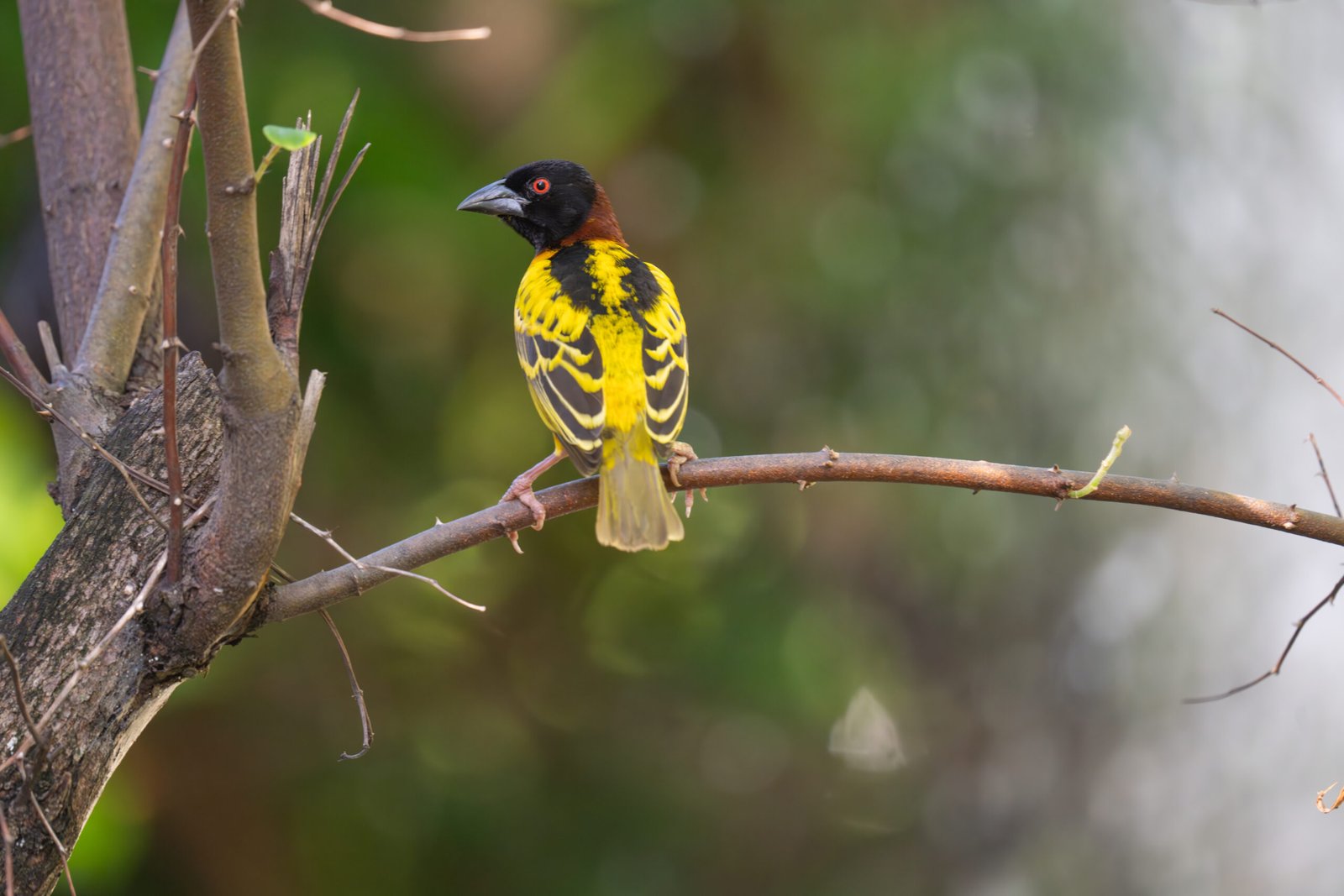
The Village Weaver (Ploceus cucullatus) is a small, brightly coloured bird belonging to the weaver family, Ploceidae. It is native to much of sub-Saharan Africa, but populations have also become established outside their natural range, including on several tropical islands. The species is known for its hanging woven nests, noisy breeding colonies and ability to live close to people.
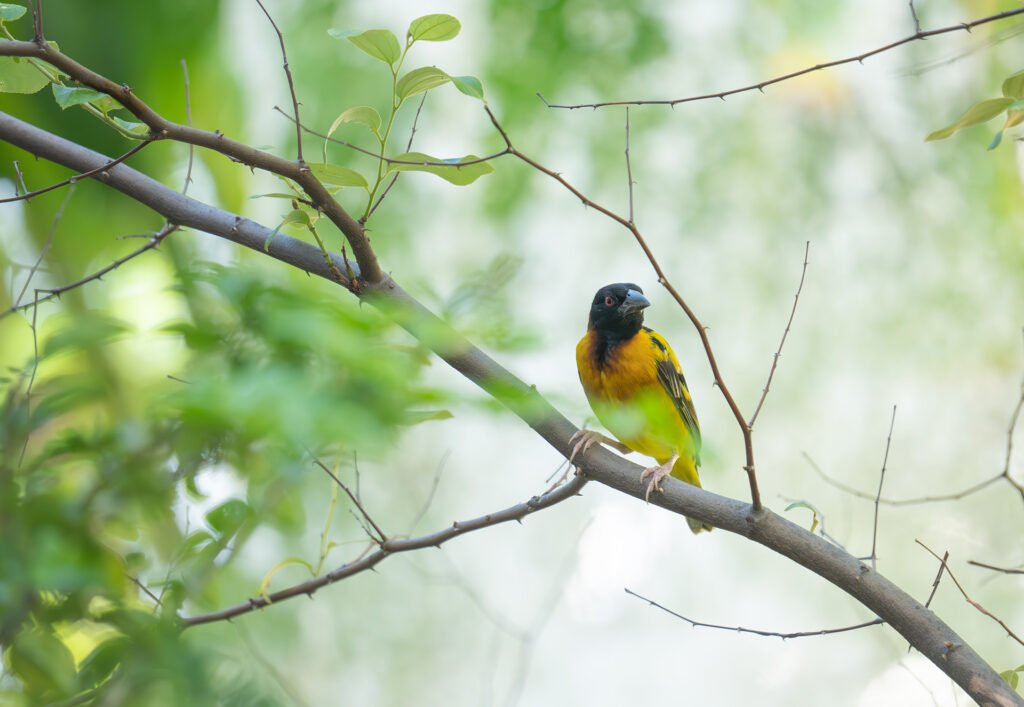
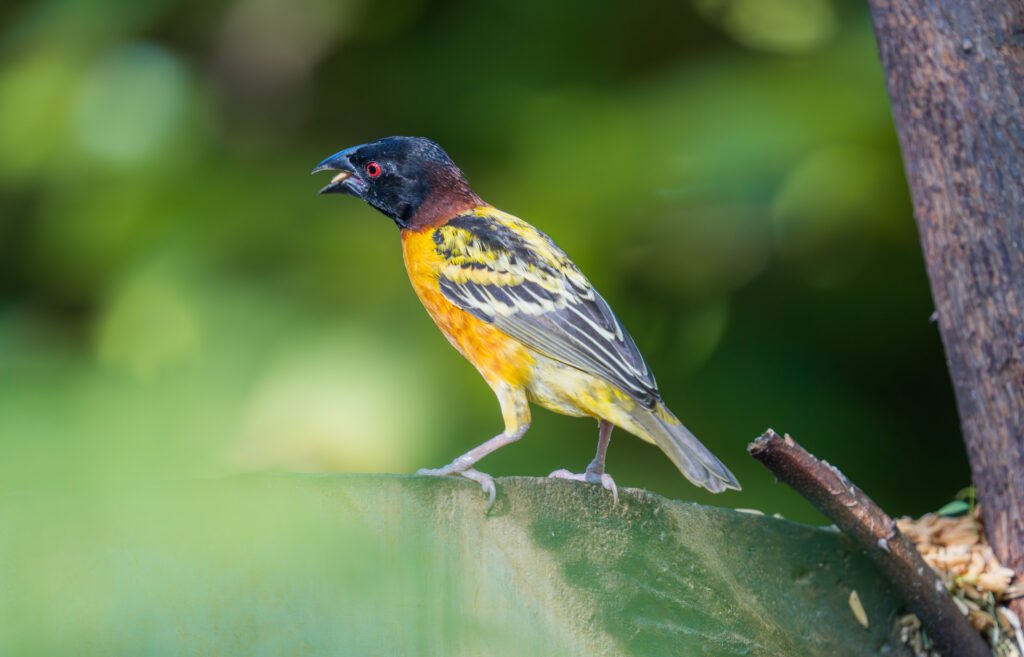
The Village Weaver is not a naturally occurring native bird of the Maldives. Its presence in the country is most likely connected to the importation and keeping of exotic birds. A recent national report on Maldivian birds states that increasing numbers of escaped introduced birds are appearing on inhabited and resort islands. These include at least two species of weaver birds belonging to the genus Ploceus, some of which have established local populations.
During a recent personal observation at Artificial Beach in Malé, a large number of Village Weavers were seen together. Similar groups are now reported from several other inhabited islands, suggesting that the species is becoming locally common in parts of the Maldives.
Description
The Village Weaver is a stocky bird measuring approximately 15–17 centimetres in length. It has a strong, cone-shaped bill adapted for eating seeds and grain.
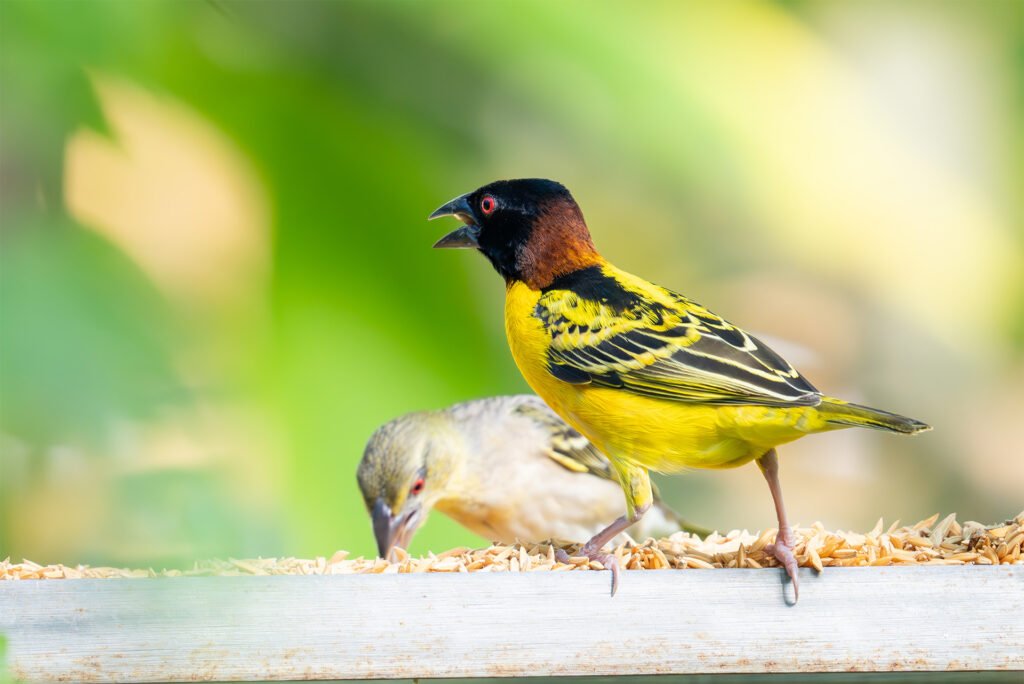
Breeding males are especially noticeable. They usually have bright yellow underparts, yellow-and-black wings and a dark face or head. The exact amount of black and chestnut colouring differs between subspecies. The eyes are normally dark reddish. Females and young birds are less colourful, with olive-yellow or brownish upperparts, pale underparts and yellow markings on the wings.
The subspecies occurring in the Maldives has not yet been properly studied or confirmed. Photographs, measurements and genetic studies may be required to determine the original source population.
The global population is considered generally stable, and the species is not currently regarded as threatened.
Natural Distribution
The natural range of the Village Weaver covers a large part of sub-Saharan Africa. Outside Africa, introduced populations have become established in places such as Mauritius, Réunion, Hispaniola and parts of the Caribbean and Europe. Historical evidence shows that several island populations began when captive birds escaped or were released.
On Mauritius and Réunion, escaped birds gradually increased in number and spread beyond their original introduction sites. In Hispaniola, the population remained small for many years before experiencing a rapid increase. These examples show that an introduced population can remain unnoticed or localised before suddenly becoming abundant.
Origin in the Maldives
The exact date and island on which the Village Weaver first became established in the Maldives are not clearly documented. However, the most likely pathway is the cage-bird trade, followed by accidental escape or deliberate release.
Some people may also have transported these birds between islands and later released them. Nevertheless, without documented evidence, it would be incorrect to identify particular people or islands as responsible. The safest scientific description is that the Maldivian population probably originated from escaped or released captive birds.
The national bird-status report confirms that pet keeping has resulted in increasing numbers of introduced birds escaping and sometimes establishing breeding populations on Maldivian islands.
Why Can Their Population Increase So Quickly?
Several characteristics help the Village Weaver establish and spread in new locations.
The species can undertake several breeding attempts during a single season. Research from other regions recorded an average of four breeding attempts within a 75-day period, while breeding seasons may continue for several months where conditions remain suitable.
Village Weavers also have a broad diet. They eat grass seeds, grain, fruits and insects, making it easy for them to find food around houses, parks, waste areas, gardens and cultivated land. They are strongly associated with human settlements and agricultural environments.
They breed in colonies, with many nests sometimes hanging from a single tree. Living in groups can help them locate food, defend nesting areas and warn one another about danger. The birds can also behave aggressively towards other species near feeding and nesting areas. Their enclosed hanging nests provide some protection against predators.
The tropical Maldivian climate, availability of coconut palms and ornamental trees, abundant grasses and regular access to human food may provide favourable conditions. On islands with few predators or competitors, even a small founding population containing both males and females may increase considerably. However, no detailed population study has yet determined which factors are most important in the Maldives.
Nesting and Breeding
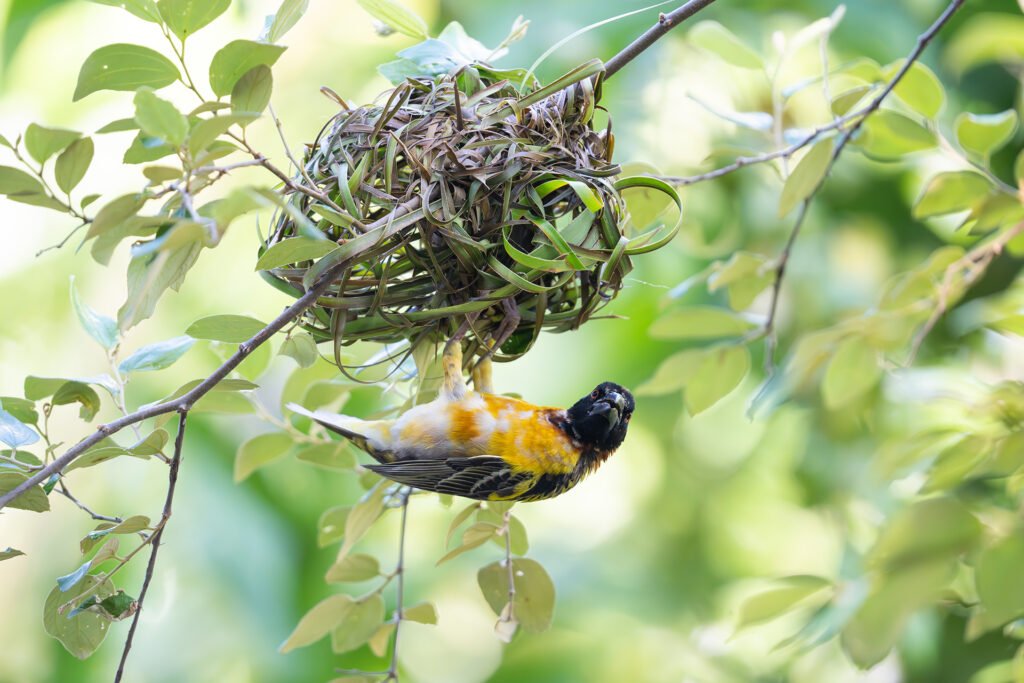
The male constructs the nest using strips of grass, palm leaves and other flexible plant material. The finished nest is rounded or oval, with an entrance facing downward. Males may build several nests, while females inspect them before selecting a nesting site.
Village Weavers normally breed close together in noisy colonies. A suitable tree may contain dozens of active, unfinished and abandoned nests. The female generally lays two or three eggs and is mainly responsible for incubation and caring for the young.
Possible Environmental Effects
The environmental impact of the Village Weaver in the Maldives has not yet been scientifically assessed. It should therefore not automatically be described as harmful or invasive without local evidence.
However, introduced populations elsewhere have damaged rice, grain and other crops. Large colonies may also compete with native birds for food, nesting trees and space. The international cage-bird trade can additionally introduce parasites and diseases that may affect native birds.
Because Maldivian islands are small and ecologically isolated, introduced species should be monitored before their populations become too large to manage.
Monitoring in the Maldives
Records should include the island, exact location, date, approximate number of birds, photographs, nesting trees and number of active nests. Observations from Artificial Beach, Malé, and other islands could help create the first reliable map of the species’ distribution in the country.
Captive Village Weavers and other exotic birds should never be released into the wild or transported between islands without proper control. Early monitoring is important because previous control efforts against established Village Weaver populations in other countries have often had limited success.
References
Maldives national assessment of common breeding and migratory birds.
BirdLife International species factsheet for the Village Weaver.
Lahti, D. C. — assessment of the Village Weaver as an introduced and potentially invasive bird.
Maldives Village Weaver observation records.

Share a useful observation
Comments can help improve local knowledge. Share identification notes, island records, behaviour, host plants, or corrections respectfully.