
 Niyaz
Niyaz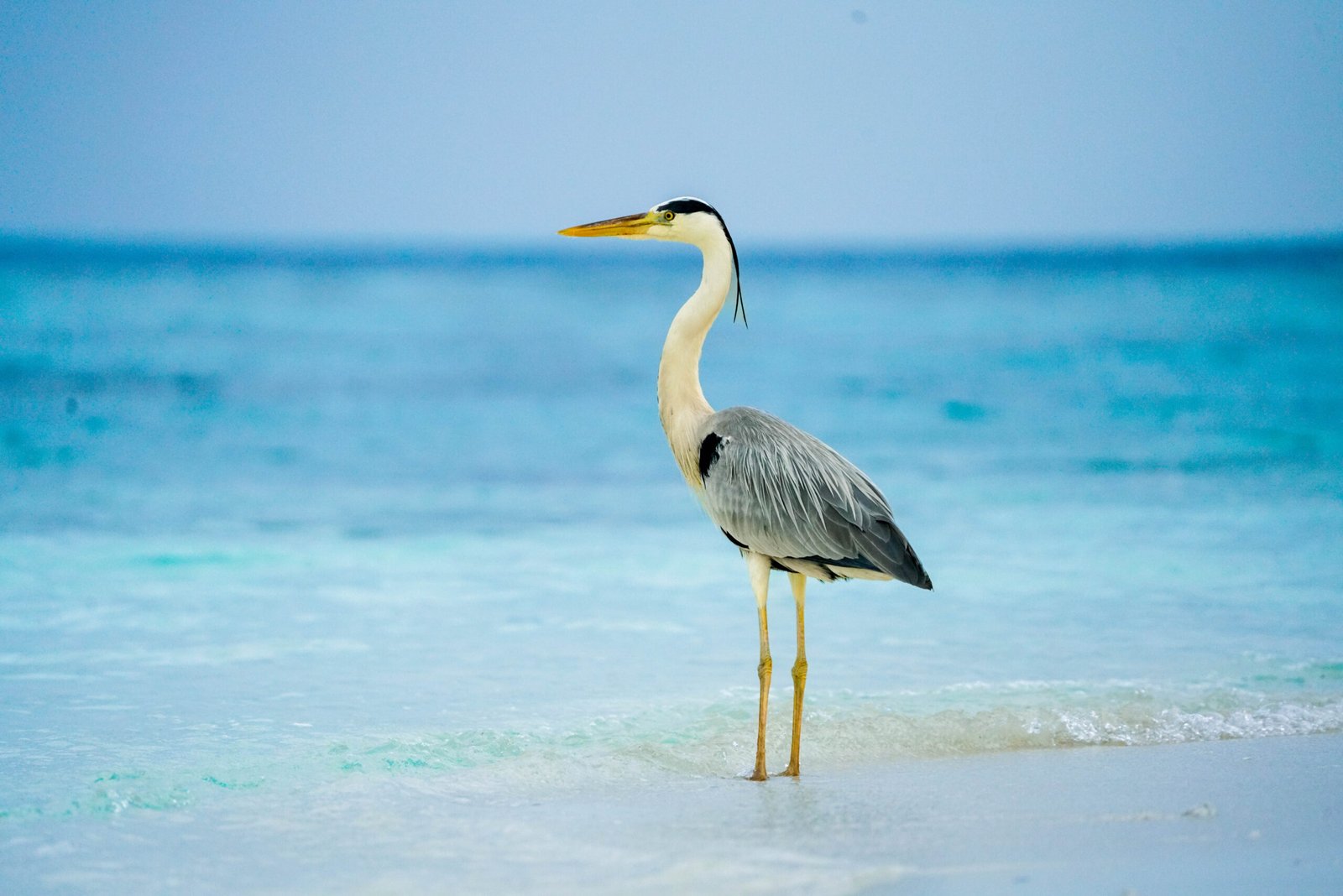
Among the many birds that grace the islands of the Maldives, few are as iconic and memorable as the Grey Heron, known locally in Dhivehi as “Maakanaa.” Tall, elegant, and unmistakably graceful, the Grey Heron has long been part of Maldivian coastal life, appearing along lagoons, wetlands, harbors, mangroves, and even within the busy heart of Malé City.
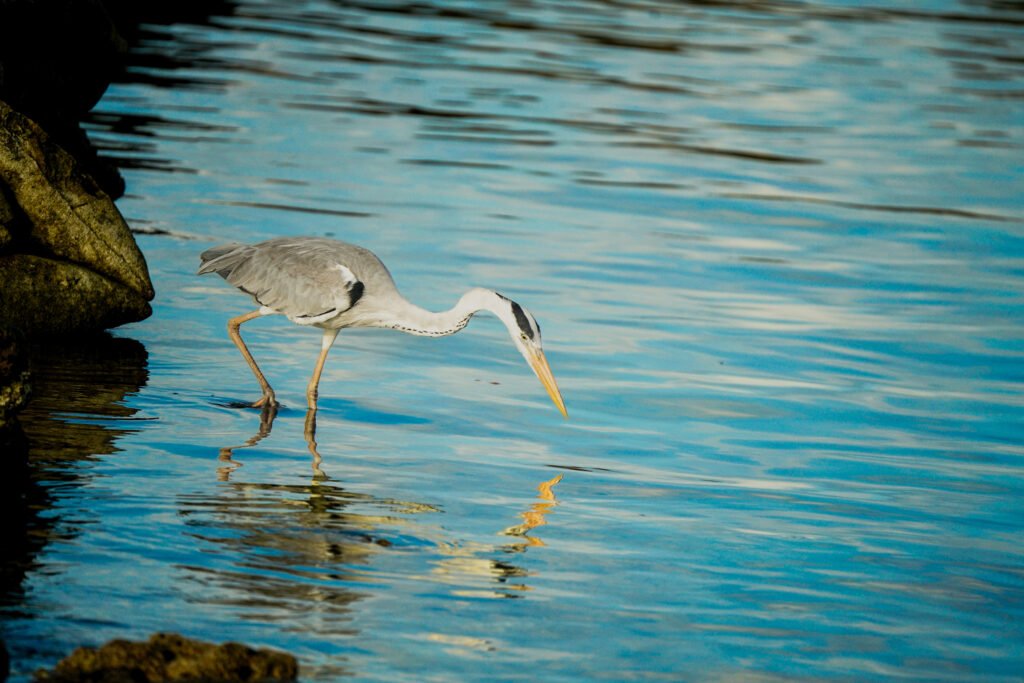
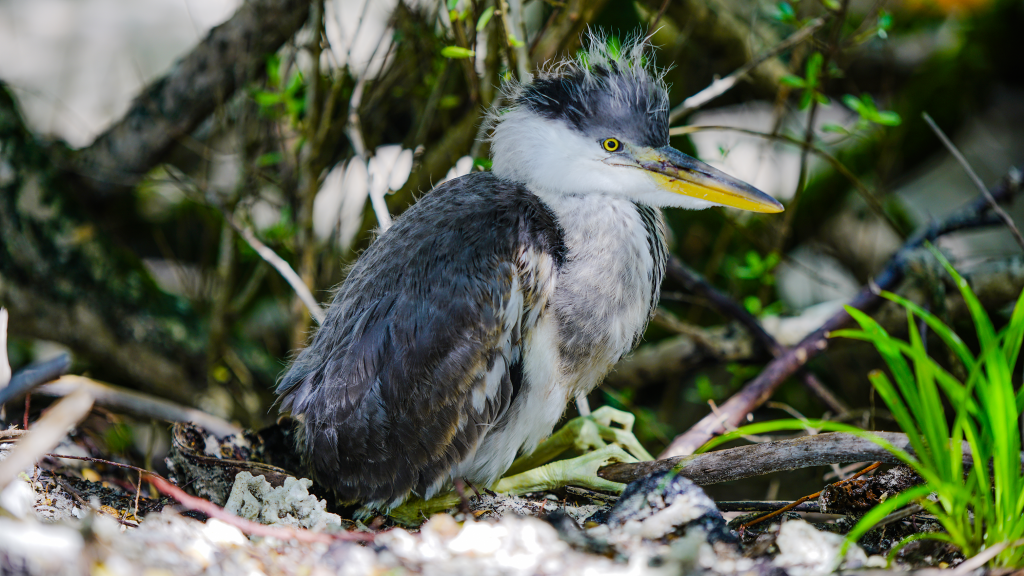
For me, the Grey Heron is more than just a bird species. It is deeply connected to my childhood memories, my passion for wildlife, and my journey as a nature photographer. Growing up in the Maldives, I spent countless hours observing these birds in their natural habitat. During my teenage years, I even had the rare experience of raising a Grey Heron chick into adulthood. Watching it grow from a fluffy young bird into a powerful, soaring heron created a lifelong bond with nature and inspired my dedication to documenting the biodiversity of the Maldives.
A Bird of Elegance and Power
The Grey Heron, scientifically known as Grey Heron, is the largest commonly seen bird species in the Maldives. Belonging to the heron family Ardeidae, this magnificent bird is instantly recognizable by its long neck, sharp dagger-like bill, broad wings, and slow, deliberate movements.
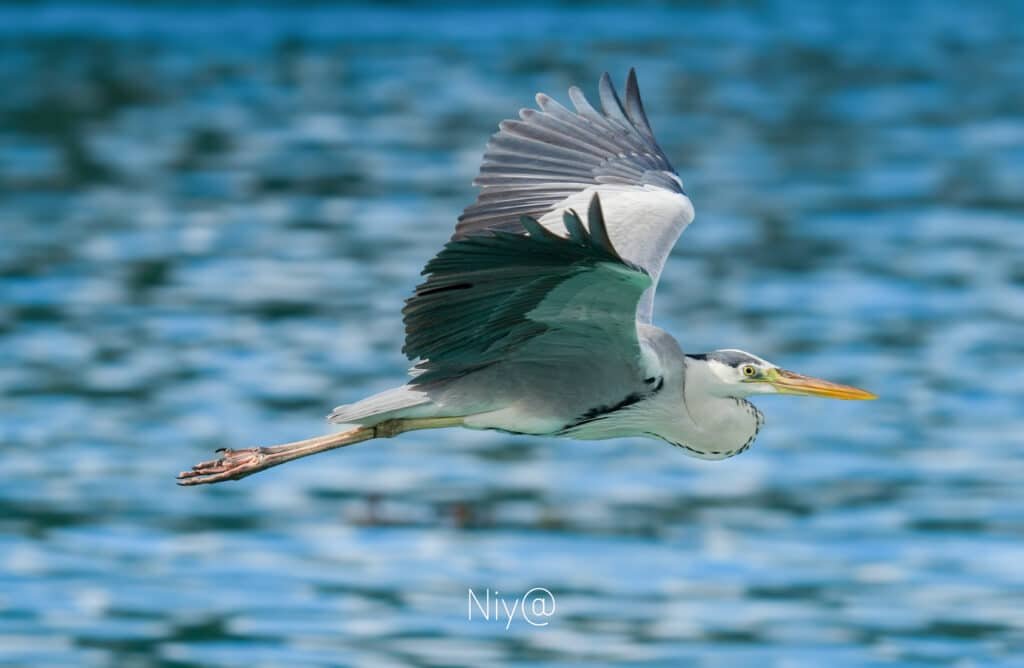
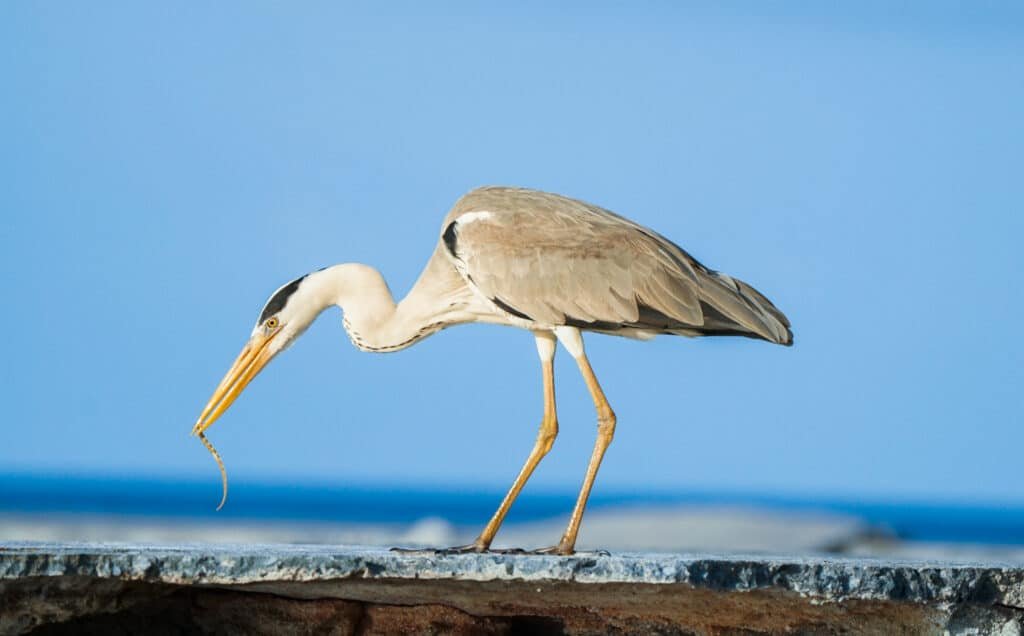
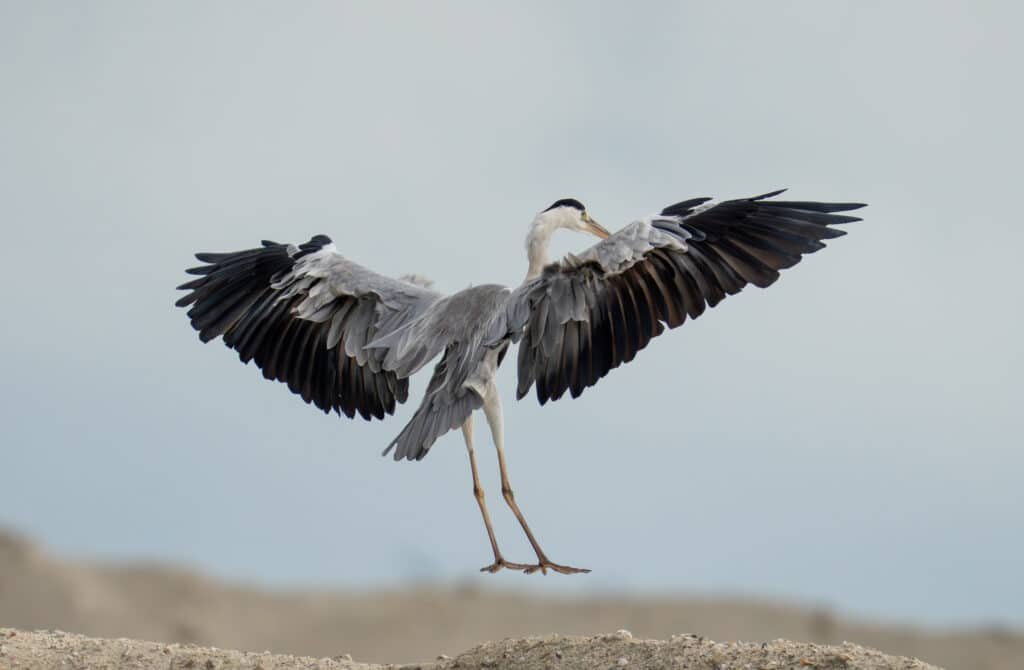
Standing tall along the shoreline, the Grey Heron appears almost statuesque while hunting. It patiently waits in shallow waters before striking with incredible speed to catch fish, crabs, and other aquatic prey. In flight, its large wings beat slowly and powerfully, while the neck folds into the characteristic “S” shape seen in most herons.
Their grey plumage, white neck, black head markings, and yellowish bill give them a refined and regal appearance. Against the turquoise lagoons and golden sunsets of the Maldives, Grey Herons create some of the most beautiful wildlife scenes imaginable.
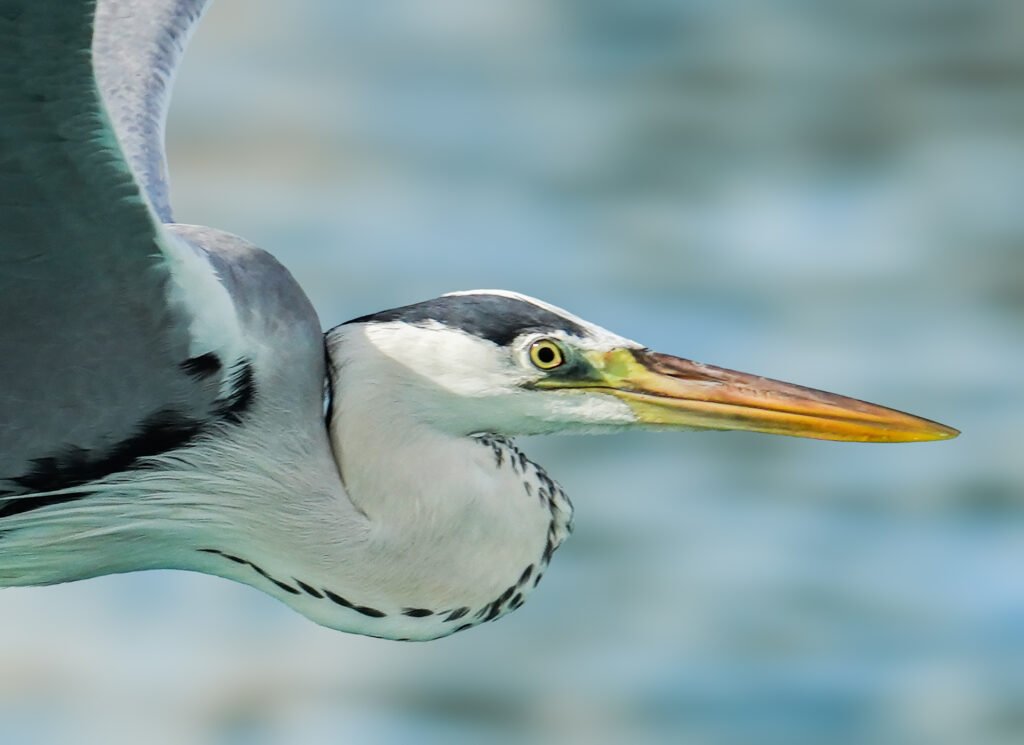
Unlike many birds that appear only seasonally, the Grey Heron is a very common bird throughout the Maldives. They can be seen across numerous islands and atolls, especially near coastal environments, wetlands, harbors, and mangrove ecosystems.
One of the most famous locations to observe Grey Herons is the harbor area of Malé, particularly near the local fish market. Here, dozens of Grey Herons gather daily, attracted by fish scraps and the busy marine activity. Their presence has become part of the city’s natural identity.
On one memorable occasion, I attempted to count the number of Grey Herons gathered near the fish market and observed well over one hundred birds together. Seeing such a large congregation of these majestic birds within an urban setting was truly remarkable and demonstrated how wildlife can adapt alongside human activity.
Grey Herons Breeding in the Maldives
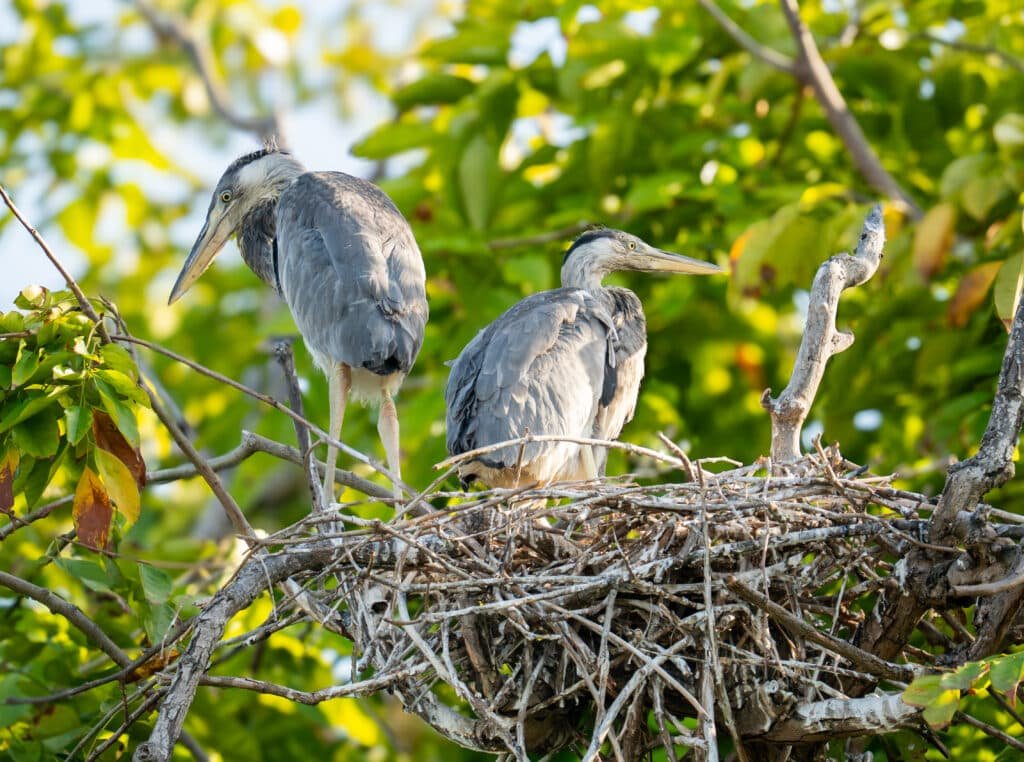
Many people assume Grey Herons are only visitors to the Maldives, but this is not true. The species actively breeds in the country, and I have personally witnessed Grey Heron nests many times over the years.
One particularly important breeding area is in Noonu Ehdhufaharu Maakana Huraagandu, a location near Soneva Jani. The very name “Maakana Huraagandu” reflects the strong connection between the area and these birds. This island environment provides suitable nesting trees, protection, and feeding grounds that support breeding colonies.
Watching Grey Herons build nests, incubate eggs, and raise chicks is a fascinating experience. Their nests are usually constructed high in trees, where the young birds remain protected while the parents continuously bring food.
Another remarkable breeding site exists right in the center of urban Malé. Grey Herons have been observed nesting in the large trees near Republic Square, particularly in front of Islamic Centre. Seeing these large wild birds breeding successfully within one of the most densely populated cities in the world highlights the adaptability and resilience of the species.
Childhood Memories and Human Connection
In earlier decades, keeping injured or rescued wild birds temporarily at home was more common in the Maldives. During my childhood, my family and others in the community occasionally cared for Grey Herons and other birds. My own experience raising a young Grey Heron remains one of the most unforgettable parts of my life.
The bird gradually became comfortable around us, learning to feed and move confidently. Observing its behavior closely taught me to appreciate the intelligence and personality of birds. These early experiences played a major role in shaping my love for wildlife photography and conservation.
Today, wildlife awareness has grown, and protecting birds in their natural habitats is increasingly important. Still, those childhood memories remain a reminder of how closely connected island communities once were with the surrounding natural world.
Through the Lens of Wildlife Photography
As a wildlife photographer, the Grey Heron continues to be one of my favorite subjects. Their calm behavior, graceful posture, and dramatic wingspan make them endlessly photogenic.
Capturing a Grey Heron in the Maldives often involves patience. Some moments occur during sunrise along quiet shorelines, while others happen unexpectedly in crowded harbor areas where the birds interact closely with fishing activity.
Photographing these birds has allowed me to document not only their beauty but also their relationship with Maldivian environments — from mangrove ecosystems and coral islands to urban city parks and harbors.
Every photograph tells a story of coexistence between nature and island life.
Ecological Importance
Grey Herons play an important ecological role in the Maldives. As predators of fish, crabs, and small aquatic animals, they help maintain balance within coastal and wetland ecosystems.
Their presence is often an indicator of healthy marine and wetland environments. Mangroves, shallow lagoons, and natural shorelines provide critical feeding and nesting habitats for these birds. Protecting such ecosystems benefits not only Grey Herons but also countless other species that depend on these environments.
Scientific Name: Ardea cinerea
Family: Ardeidae
Dhivehi Name: Maakanaa
Status in Maldives: Common resident bird
Breeding: Breeds in several islands and urban locations in the Maldives
Diet: Fish, crabs, small marine animals, amphibians
Lifespan: Approximately 15 years in the wild
Habitat: Wetlands, mangroves, lagoons, harbors, coastal areas, parks
A Symbol of Maldivian Nature
The Grey Heron is more than simply a coastal bird. It is part of the natural identity of the Maldives — a silent observer of island life for generations.
Whether standing motionless in shallow waters, flying across sunset skies, or nesting in the heart of Malé City, the Grey Heron represents resilience, beauty, and the enduring connection between wildlife and the Maldivian islands.
For me personally, every sighting of a Maakanaa brings back memories of childhood, photography adventures, and the incredible biodiversity that continues to inspire my work documenting the natural heritage of the Maldives.Maldives.

Share a useful observation
Comments can help improve local knowledge. Share identification notes, island records, behaviour, host plants, or corrections respectfully.