
 Niyaz
Niyaz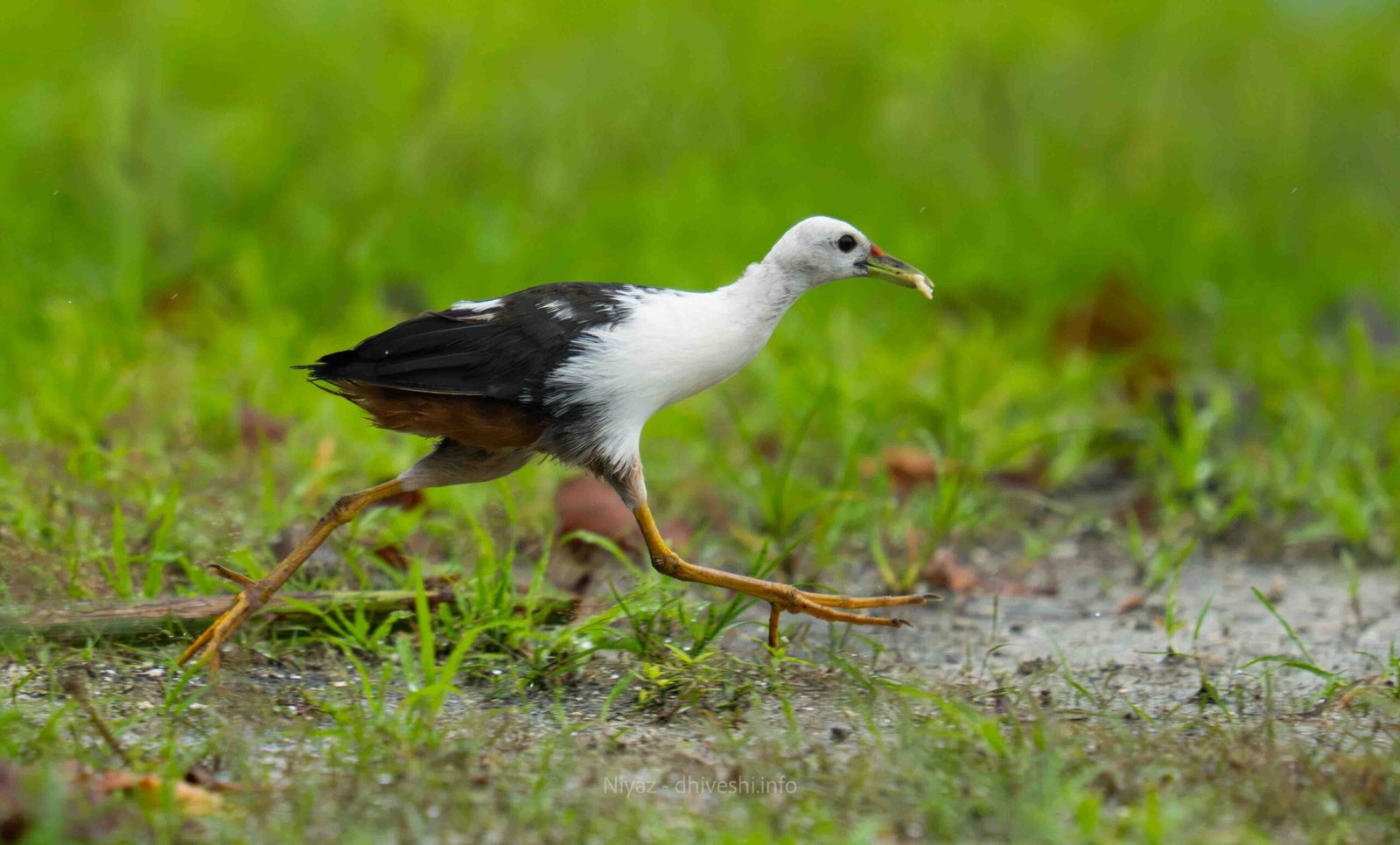
The White-breasted Waterhen (Amaurornis phoenicurus), locally known as ކަނބިލި — Kanbili, is a medium-sized wetland bird found on many islands of the Maldives. It is the national bird of the Maldives and is one of the country’s most familiar native birds. The Maldivian population is commonly referred to as the Maldivian Waterhen, and Maldivian environmental sources identify it as Amaurornis phoenicurus maldivus.
Kanbili is closely connected with everyday island life. It can be seen around mangroves, freshwater ponds, marshy ground, gardens and areas with thick vegetation. Although it usually remains close to cover, it often walks into open spaces while searching for food.
Description
The White-breasted Waterhen is approximately 28 to 33 centimetres long. It has a compact body, long legs, very long toes and a short tail that is frequently held upright. Its long toes help it walk over soft mud, wet vegetation and uneven ground without sinking deeply.
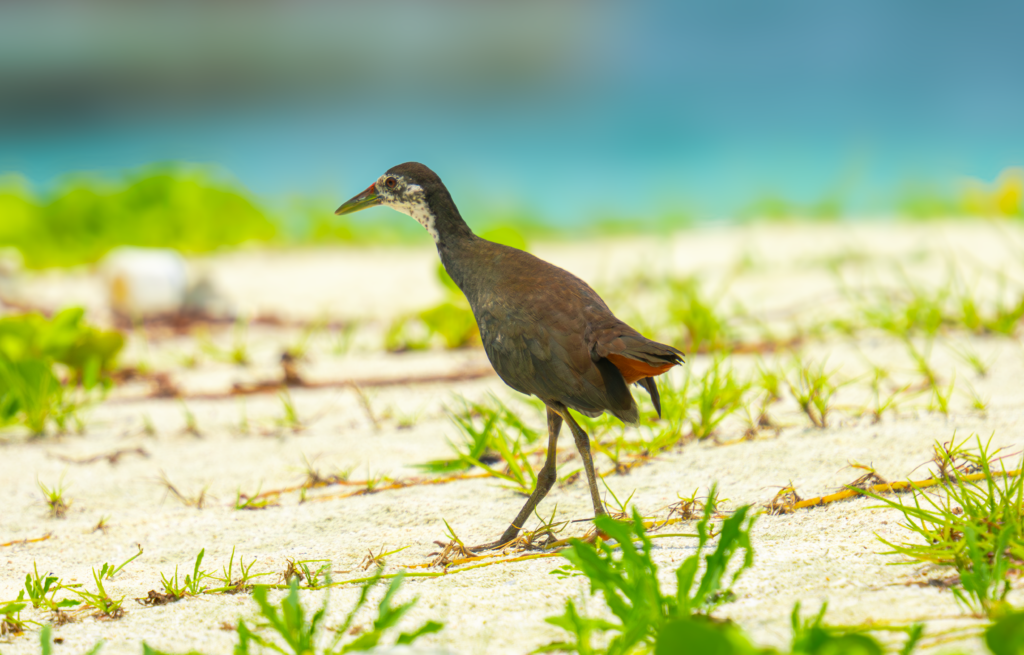
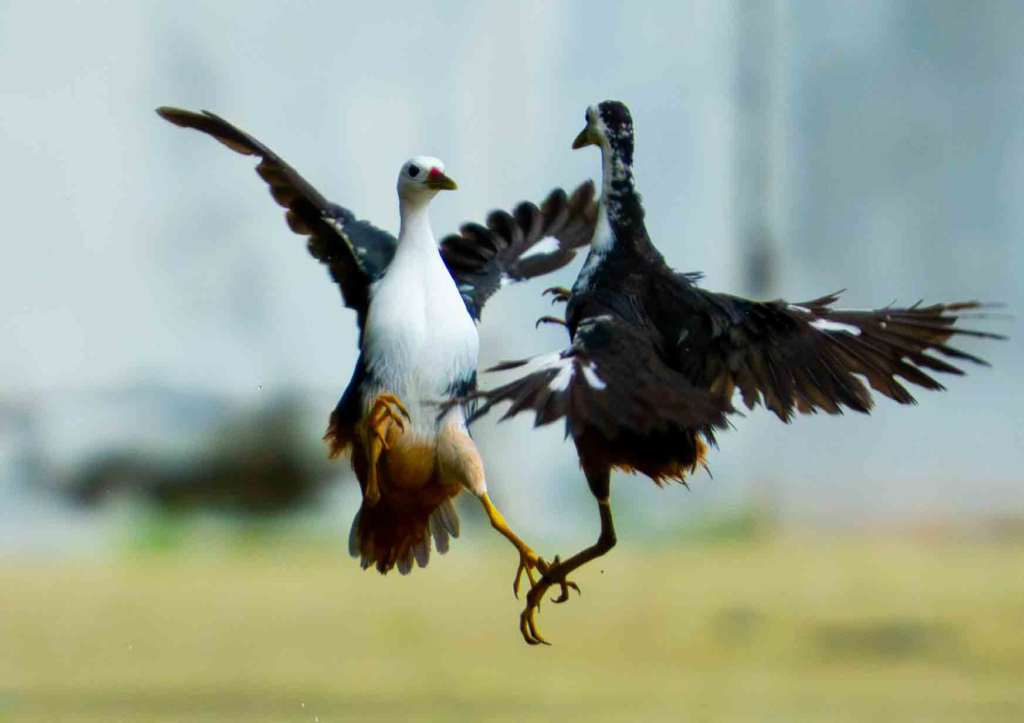
Adult Kanbili have dark slate-grey upperparts, wings and flanks. The face, throat, breast and upper belly are clean white, producing a strong contrast with the darker body. A reddish-brown or chestnut-coloured patch is visible beneath the tail, particularly when the bird raises or flicks its tail. The bill and legs are generally yellowish or greenish-yellow. Males and females are similar in appearance, although females may be slightly smaller.
Juvenile birds are duller than adults. Their upperparts are brownish-grey, while the white areas of the face and underparts may appear greyish, buff or less clearly defined. Newly hatched chicks are covered in black down and have disproportionately large feet and long toes. As they mature, they gradually develop the clear white face and breast of the adult.
Distribution and habitat
The White-breasted Waterhen is widely distributed across tropical and subtropical Asia. Its range extends from Pakistan, India and Sri Lanka through southern China and Southeast Asia to Indonesia and several islands of the Indian Ocean. It is mainly a resident species, although individuals may make local movements when water levels or feeding conditions change.
The species usually inhabits freshwater marshes, mangrove wetlands, reed beds, ponds, canals, rice fields and areas with dense vegetation near water. It can also live near brackish water and coastal habitats, particularly on islands where permanent freshwater is limited. White-breasted Waterhens are adaptable and may occur around village gardens, roadsides, drainage areas and other habitats modified by people.
Kanbili in the Maldives
Kanbili is common on many Maldivian islands and is especially noticeable where thick ground vegetation, freshwater, swampy soil or mangrove habitats remain. It may be seen walking beside ponds, crossing roads, searching below bushes or quickly disappearing into dense vegetation when approached.
Its ability to live in small wet areas and vegetated parts of inhabited islands has allowed it to remain familiar to generations of Maldivians. Official Maldivian environmental information describes Kanbili as a marsh bird commonly associated with mangroves and wetlands, while local accounts describe it as widespread and abundant across the country.
During childhood in many island communities, young Kanbili were sometimes cared for and kept as tame birds. For many Maldivians, Kanbili is therefore not only a national symbol but also a bird connected with childhood memories and traditional island life. Children often became familiar with its movements, calls and behaviour because it lived close to homes and village vegetation.
Behaviour
The White-breasted Waterhen is less secretive than many other members of the rail family. It is often observed walking slowly in the open, although it quickly runs into thick vegetation when it senses danger. Its body is narrow from side to side, helping it move through closely packed grasses, bushes and wetland plants.
Kanbili normally walks with deliberate steps while repeatedly raising and flicking its short tail. When alarmed, it may run rapidly with its head lowered. It can fly, but it generally prefers to escape on foot and usually flies only a short distance before returning to cover.
The species is often seen alone, in pairs or as a small family group. It is particularly active during the early morning and late afternoon. Its call is loud, harsh and repetitive and may be heard from thick vegetation even when the bird itself cannot be seen. Calling often becomes more frequent during the breeding period.
Feeding
Kanbili is an omnivorous and opportunistic feeder. It searches for food on damp ground, among fallen leaves, along muddy edges and in shallow water. It uses its bill to pick food from the surface or probe soft mud and plant material.
Its diet includes insects, beetles, worms, spiders, molluscs, small fish and other aquatic invertebrates. It also eats seeds, grains, young plant shoots and other vegetable material. This varied diet helps it survive in both natural wetlands and inhabited island environments.
While feeding, the bird may move slowly and quietly, pausing frequently to examine the ground. At other times, it runs after moving insects or quickly strikes at small aquatic prey. Adults may carry small food items to their chicks during the breeding season.
Breeding
The breeding season varies according to local rainfall, water availability and habitat conditions. The nest is usually built close to the ground among thick grasses, reeds, bushes or other dense vegetation near water. It is formed from dry leaves, grass stems and other plant material.
A typical clutch contains several eggs, commonly around six or seven. Both parents participate in incubation and caring for the young. The eggs hatch after approximately 19 days. The chicks leave the nest at an early age and follow their parents while being protected and guided through dense vegetation.
Young chicks can run soon after hatching and may hide under plants when threatened. Their black down provides camouflage in shaded wetland vegetation. The parents remain alert and may produce warning calls when people, cats or other possible predators approach.
National importance
The selection of Kanbili as the national bird reflects its close association with Maldivian islands, wetlands and local culture. Unlike many migratory birds that visit only during part of the year, Kanbili is a familiar resident that lives and breeds within the country.
Its presence also represents the importance of freshwater ponds, mangroves and small wetland habitats in the Maldives. These environments may appear limited in size, but they support birds, insects, fish, crabs, plants and many other forms of island wildlife.
Conservation
The White-breasted Waterhen has a very large global distribution and is currently considered a species of low global conservation concern. However, the official Maldivian national assessment lists the local Maldivian Waterhen as not yet evaluated.
In the Maldives, the main pressures on Kanbili are likely to include the filling and reclamation of wetlands, removal of thick vegetation, pollution, road traffic, disturbance near nesting areas and predation by introduced animals such as cats and rats. Small freshwater areas and mangrove habitats are particularly important because they provide food, shelter and breeding sites.
Protecting natural vegetation, ponds and mangrove wetlands will help ensure that future generations continue to see and hear Kanbili on Maldivian islands. Although it was sometimes kept as a childhood pet in earlier times, wild Kanbili are best appreciated and protected in their natural environment.

Share a useful observation
Comments can help improve local knowledge. Share identification notes, island records, behaviour, host plants, or corrections respectfully.