
 Niyaz
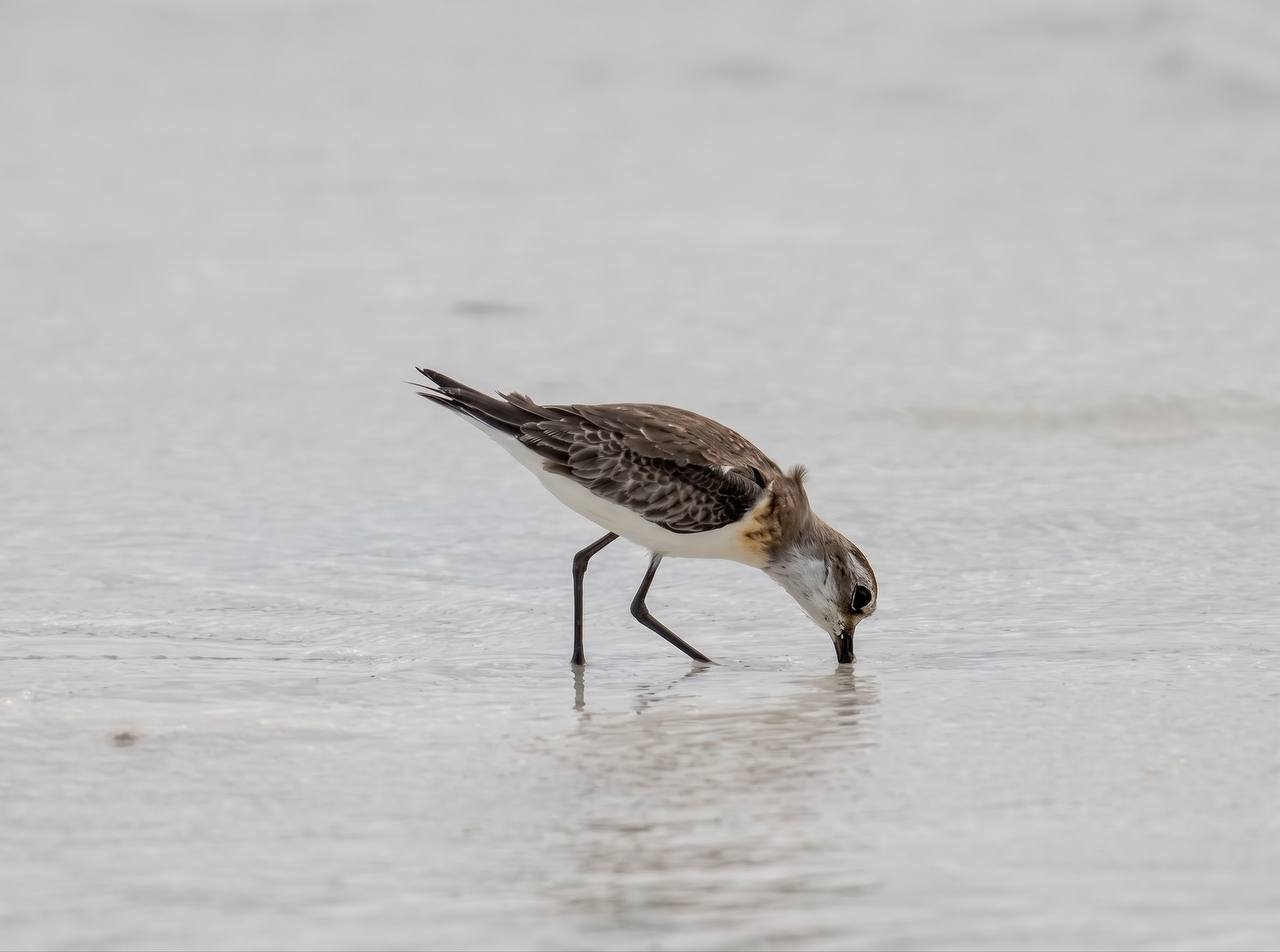
Kentish Plover (Anarhynchus alexandrinus) – Kiru Bondana
A migratory shorebird of the Maldives
The Kentish Plover (Anarhynchus alexandrinus), locally known in Dhivehi as Kiru Bondana (ކިރު ބޮނޑަނަ), is a small migratory shorebird belonging to the family Charadriidae. It is found along sandy beaches, shallow lagoons, intertidal flats and coastal wetlands, where it searches for small invertebrates.
The Kentish Plover is widely distributed across parts of Europe, Asia and Africa. While some populations are resident, others undertake seasonal migrations to warmer coastal regions. In the Maldives, it occurs as a non-breeding migratory visitor and can be observed on suitable shorelines throughout the archipelago.
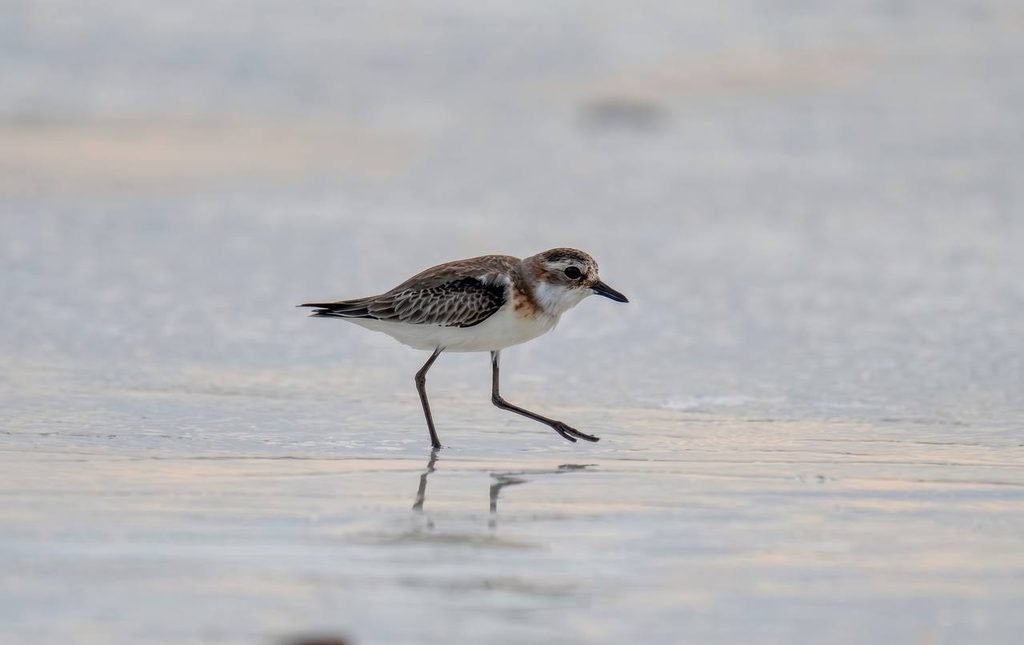
The species is recognised by its sandy-brown upperparts, white underparts, relatively slender black bill, dark legs and distinctive markings on either side of the breast. Its small size and rapid movements along the waterline make it a characteristic bird of open coastal habitats.
According to the 2025 Status of Common Breeding and Migratory Birds in the Maldives assessment, the Kentish Plover is classified as widespread but uncommon in the country, with no recorded breeding population. ResearchGate
Classification
Description
The Kentish Plover is a small, lightly built shorebird, generally measuring approximately 15–18 cm in length. It has a rounded head, a short neck, relatively long legs and a compact body adapted for moving across sandy and muddy coastal environments.
Its upperparts are predominantly sandy-brown or greyish-brown, providing effective camouflage against coastal sand and exposed shorelines. The underparts are mostly white, with dark or brownish patches on either side of the upper breast. Unlike some other plovers, these patches do not form a complete breast band.
The bill is black, relatively short and slender, while the legs are generally dark grey to blackish. The bird has large, dark eyes, a pale forehead and a white collar around the back of the neck.
During the breeding season, adult males develop more prominent facial and crown markings, including black markings around the head and reddish-brown colouring on the crown. Females and non-breeding adults generally have less contrasting plumage, with softer brown and grey tones.
These differences in appearance can make identification challenging, especially when comparing the Kentish Plover with other small plovers observed in the Maldives. Birds of Singapore+1
Distribution and Migration
The Kentish Plover has a broad geographical distribution, occurring across coastal regions of Europe, Africa and Asia. It inhabits both temperate and tropical environments, with different populations displaying varying migration patterns.
Some populations remain within their breeding regions throughout the year, while others migrate seasonally between northern breeding grounds and warmer wintering areas.
Migratory populations breeding in temperate parts of Eurasia travel southwards during the northern winter, reaching coastal areas of Africa, the Indian subcontinent and Southeast Asia.
The Maldives lies within a region used by numerous migratory shorebirds travelling between their breeding and non-breeding areas. The country’s extensive coastlines, sandy islands, shallow lagoons and intertidal habitats provide suitable feeding and resting locations.
In the Maldives, Kentish Plovers are regarded as migratory non-breeding visitors. Their presence is generally associated with seasonal movements, particularly during the northern winter and migration periods. esabii.biodic.go.jp+1
Habitat
The Kentish Plover inhabits open coastal environments with relatively little vegetation. It is particularly associated with sandy beaches, shallow tidal flats, salt flats, coastal wetlands and lagoon margins.
In the Maldives, the bird may be encountered along exposed sandy shorelines, shallow lagoon edges and other coastal areas where small invertebrates are available.
These habitats provide important feeding opportunities, particularly when tidal movements expose wet sand and shallow sediment. The bird often forages close to the waterline, moving across areas recently uncovered by receding water.
Its sandy-brown and white plumage helps it blend into the surrounding environment, making it difficult to notice when resting or remaining motionless.
Feeding and Behaviour
The Kentish Plover feeds primarily on small invertebrates, including insects, insect larvae, small crustaceans, worms and other organisms found in sandy or muddy coastal habitats.
It commonly uses a distinctive run-and-stop feeding technique. The bird moves rapidly across the shoreline, pauses to inspect the ground and then picks food from the surface or shallow sediment using its bill.
Kentish Plovers may feed individually, in pairs or in small groups. During the non-breeding season, they sometimes associate with other migratory shorebirds occupying similar feeding areas.
The species is generally alert and responds quickly to approaching disturbances. When threatened, it may run across open sand or take flight before settling elsewhere along the shoreline.
During periods of rest, the bird may remain almost motionless, relying on its natural camouflage to avoid detection. BirdLife Cyprus+1
Breeding
Kentish Plovers generally breed in open environments such as sandy beaches, salt flats and sparsely vegetated coastal areas. Nesting usually takes place directly on the ground, where the birds create shallow depressions in sand, gravel or other suitable substrates.
A typical clutch contains approximately three eggs, which are naturally camouflaged against the surrounding ground. Both parents may participate in incubation and protecting the young.
The chicks are precocial, meaning they are capable of walking and searching for food shortly after hatching, although they remain dependent on parental protection during their early development.
There is currently no established breeding record for the Kentish Plover in the Maldives. The species is documented in the country as a non-breeding visitor. BirdLife Cyprus+1
Observations in the Maldives
The Kentish Plover is recorded from different parts of the Maldives and is considered a widespread but uncommon migratory shorebird. Its presence is closely associated with suitable coastal environments, particularly sandy beaches, shallow lagoons and intertidal feeding grounds.
Photographs and observations of birds identified locally as Bondana have also been shared by wildlife photographers and birdwatchers from several islands and atolls, including Addu Atoll, H.Dh. Vaikaradhoo, Sh. Funadhoo, and other locations across the country. Such observations indicate the wider occurrence of small plover species in the Maldives, although individual photographs require careful identification to distinguish Kentish Plovers from similar species.
The Kentish Plover has also been personally observed and photographed at K. Dhiffushi, Kaafu Atoll, and in Laamu Atoll. These observations include birds resting on sandy shorelines, walking near the water’s edge and actively feeding in shallow coastal water.
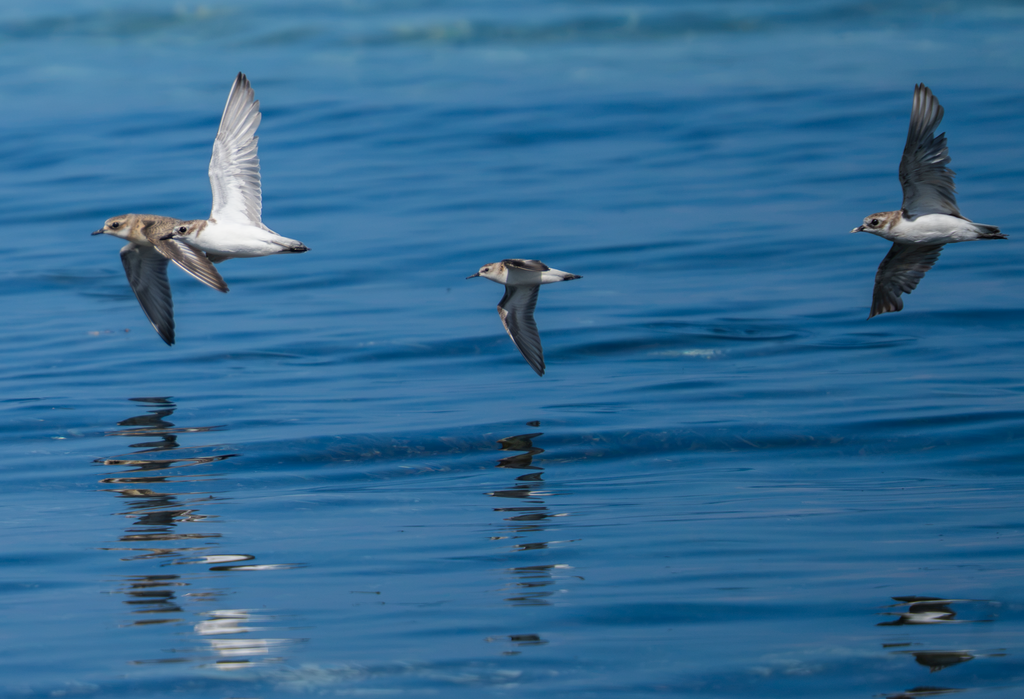
During observations in Laamu Atoll, several small migratory shorebirds were seen sharing the same coastal habitat. Some individuals were observed feeding along the shoreline, while others were resting or moving together in small groups. Photographs taken during these encounters document different aspects of their behaviour, including walking, foraging and flight.
Observations from Dhiffushi and Laamu, together with photographic reports from other islands, highlight the importance of coastal habitats throughout the Maldives for migratory shorebirds.
As the Dhivehi name Bondana is associated with several similar-looking plover species, photographic records should be carefully examined before assigning a species-level identification. Continued observations and photographic documentation by local wildlife photographers can help improve knowledge of the distribution, seasonal occurrence and behaviour of the Kentish Plover and other migratory shorebirds in the Maldives.
Similar Species
The Kentish Plover can be confused with other small plovers recorded in the Maldives, particularly the Tibetan Sand Plover (Anarhynchus atrifrons) and the Greater Sand Plover (Anarhynchus leschenaultii).
The Tibetan Sand Plover, locally known as Bondana, generally has a more substantial bill and broader breast markings, while the Greater Sand Plover is usually larger and longer-legged, with a noticeably heavier bill.
The Kentish Plover is typically smaller, with a relatively fine bill, limited side-breast patches and a distinctive white collar around the back of the neck.
However, differences in age, sex, seasonal plumage and viewing angle can make identification difficult. Reliable identification often requires examining several characteristics together rather than relying on a single feature. Birds of Singapore
Conservation Status
The Kentish Plover is currently classified as Least Concern (LC) on the IUCN Red List. Despite its broad distribution, the species faces conservation challenges in several parts of its range.
Important threats include coastal development, land reclamation, habitat degradation, pollution and human disturbance. Recreational activities, vehicles and increasing development along beaches can reduce the availability of safe feeding and resting areas.
In the Maldives, natural beaches, tidal flats, shallow lagoons and coastal wetlands provide important habitats for migratory shorebirds. Changes to these environments can affect the availability of food and suitable resting locations.
Protecting natural coastal habitats and reducing unnecessary disturbance are therefore important for maintaining the ecological conditions required by Kentish Plovers and other migratory birds.
Although the species does not have a recorded breeding population in the Maldives, the country’s coastal ecosystems contribute to its wider network of migration and non-breeding habitats. BTO+1
Ecological Importance
As a small invertebrate-feeding shorebird, the Kentish Plover forms part of the coastal food web. By feeding on insects, crustaceans and other small organisms, it contributes to ecological interactions within intertidal environments.
Its occurrence also highlights the importance of healthy coastal habitats capable of supporting migratory wildlife. Sandy beaches and shallow lagoons may appear relatively simple environments, but they contain diverse organisms that provide food for numerous bird species.
The seasonal presence of migratory shorebirds such as the Kentish Plover demonstrates the ecological connections between the Maldives and distant regions of Asia, Africa and Europe.
Preserving these habitats benefits not only migratory birds but also the broader coastal biodiversity of the Maldives.
References
- Steibl, S., et al. (2025). Status of Common Breeding and Migratory Birds in the Maldives. Ocean Country Partnership Programme (OCPP), Joint Nature Conservation Committee. Official report
- Anderson, R. C. & Shimal, M. (2020). A Checklist of Birds of the Maldives. Indian BIRDS Monographs, 3.
- British Trust for Ornithology. Kentish Plover – BirdFacts. Species information
- Bird Society of Singapore. Kentish Plover – Identification, Distribution and Habitat. Identification reference
- BirdLife Cyprus. Kentish Plover – Species Information. Species account
- State of India’s Birds. Kentish Plover – Species Assessment. Species assessment
- Personal field observations and wildlife photographs from K. Dhiffushi, Kaafu Atoll, and Laamu Atoll, Maldives.
- Additional photographic observations of Bondana species reported by wildlife photographers from Addu Atoll, H.Dh. Vaikaradhoo, Sh. Funadhoo, and other Maldivian islands. These reports have not all been independently verified to species level.

Share a useful observation
Comments can help improve local knowledge. Share identification notes, island records, behaviour, host plants, or corrections respectfully.